➜ Demolition & Site Cleanup
DEMOLITION & SITE CLEANUP IN Moses Lake, WA
Utilities have to be disconnected and capped by the serving provider before a structure comes down, and that scheduling step is what usually sets the demolition date rather than the machine. Dozer Construction & Landscaping, LLC handles demolition in Moses Lake, WA: sheds, shops, barns, mobile homes, concrete slabs, abandoned foundations, debris removal, material sorting, and backfilling the footprint afterward. Licensed and insured, 11 years of taking things down and leaving ground that a property owner can actually use for something else.
TAKING SOMETHING DOWN IS THE EASY HALF.
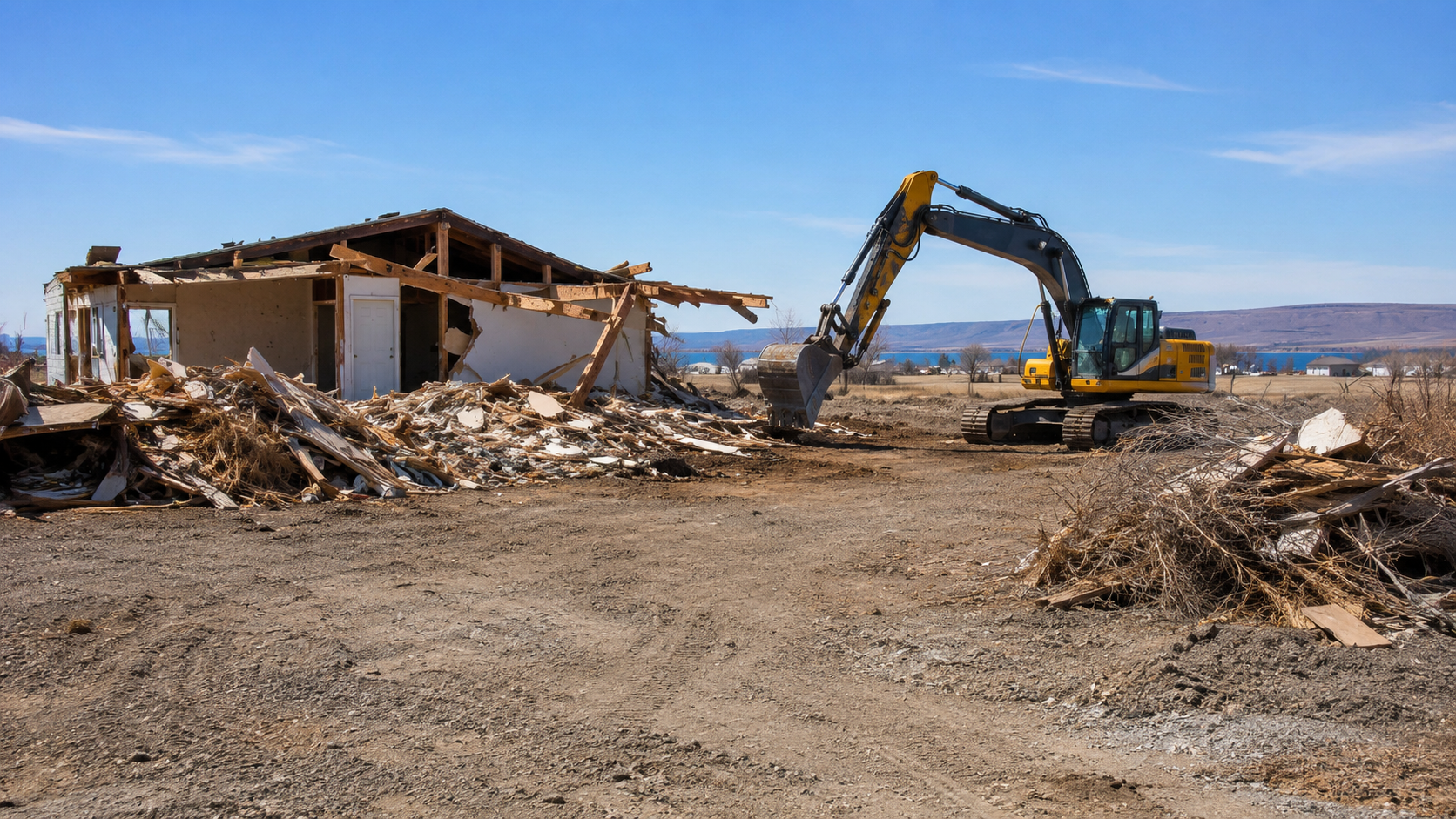
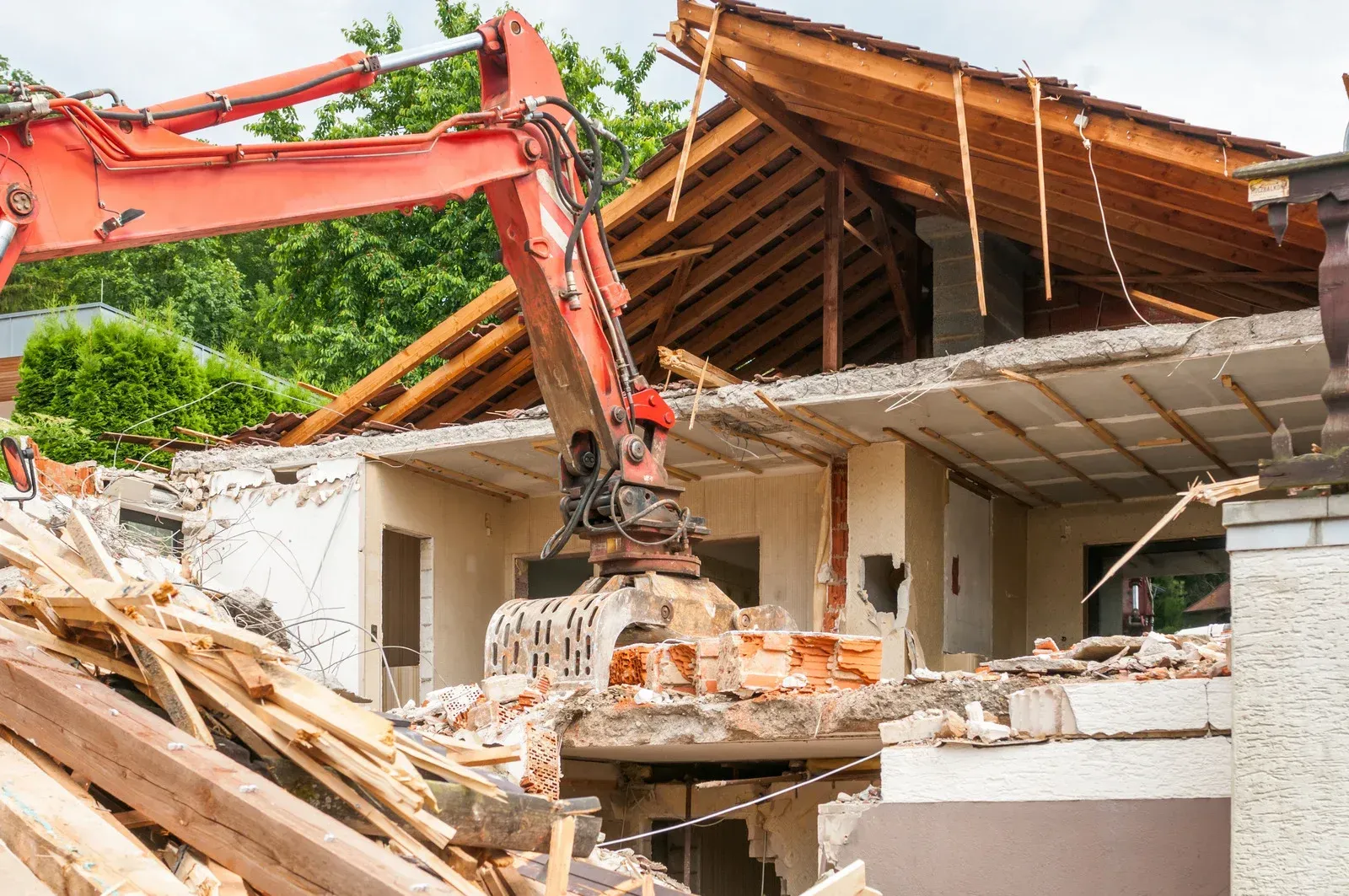
Any machine with enough reach can flatten a structure. The work that decides the cost is everything around it: shutting off and capping utilities, checking for asbestos or lead in anything built before the 1980s, keeping debris inside the property line, separating metal and concrete from landfill material, and pulling the buried portions nobody sees.
The footprint is the last question and the one most often skipped. A demolition that ends with an open hole and a debris ring is not finished, it has just moved the problem to whoever comes next.
- Utility disconnects confirmed first
- Metal and concrete separated for recycling
- Foundations and buried elements removed
- Footprint backfilled and graded
➜ DEMOLITION & SITE CLEANUP
WHAT IS LEFT BEHIND IS THE PART YOU LIVE WITH.
Most demolition complaints are not about the teardown, they are about the aftermath: rebar stubs in the yard, a slab edge two inches under the grass, a foundation stem wall backfilled over instead of removed, nails surfacing in a driveway for years. Removing the buried portions and restoring the ground properly takes a small fraction of the total effort and accounts for most of the satisfaction.
OLD BARNS, OLD SLABS, OLD MOBILE HOMES.
Grant County properties carry a lot of history in outbuildings. Pole barns past saving, grain sheds, failing shops, mobile homes that predate the current residence, and concrete poured for equipment that left decades ago. Each has its own handling: mobile homes need axles, frames, and titles addressed, while old agricultural structures often hide buried tanks, wiring, or chemical storage worth identifying before a machine touches them.
NOTHING UNDER AN OLD SLAB SURPRISES US NOW.
Buried fuel tanks, abandoned septic tanks, dry wells, hand-dug cisterns, old wiring, and concrete thicker than anyone expected. 11 years of demolition around this valley means we look for those before starting rather than discovering them mid-job with a loaded truck waiting. Finding them early usually costs a phone call. Finding them late costs a day and sometimes more. What is coming down on your property?
WHAT A CLEAN TEARDOWN GIVES YOU
Ground You Can Build On Immediately
A footprint with the foundation removed, the hole backfilled with compacted material, and the surface graded is ready for the next structure instead of needing its own correction phase first.
No Buried Surprises For The Next Project
Slabs, footings, tanks, and utility stubs removed during demolition never come back as an unexpected obstruction during the excavation for whatever gets built there afterward.
Lower Disposal Costs
Separating scrap metal, clean concrete, and wood from general landfill material reduces tonnage charges and sometimes returns value, which shows up directly in what the project costs you.
A Safer Property Right Away
Failing structures, exposed nails, unstable walls, and open holes stop being a liability the day they leave, which matters on properties with children, livestock, or public access.
Insurance And Sale Obstacles Removed
Derelict outbuildings can complicate coverage, financing, and appraisals. Removing them cleanly and documenting the work tends to simplify conversations with insurers, lenders, and prospective buyers.
One Crew Instead Of Three
Demolition, hauling, and the excavation to remove and backfill the footprint happen with the same equipment and the same people, which removes the coordination gaps where cost and delay collect.
➜ WHAT WE REMOVE
OUR DEMOLITION AND CLEANUP WORK
Demolition scopes range from a single slab to a full property clearout. These six cover the structures and materials most often removed on Basin properties.
OUTBUILDINGS
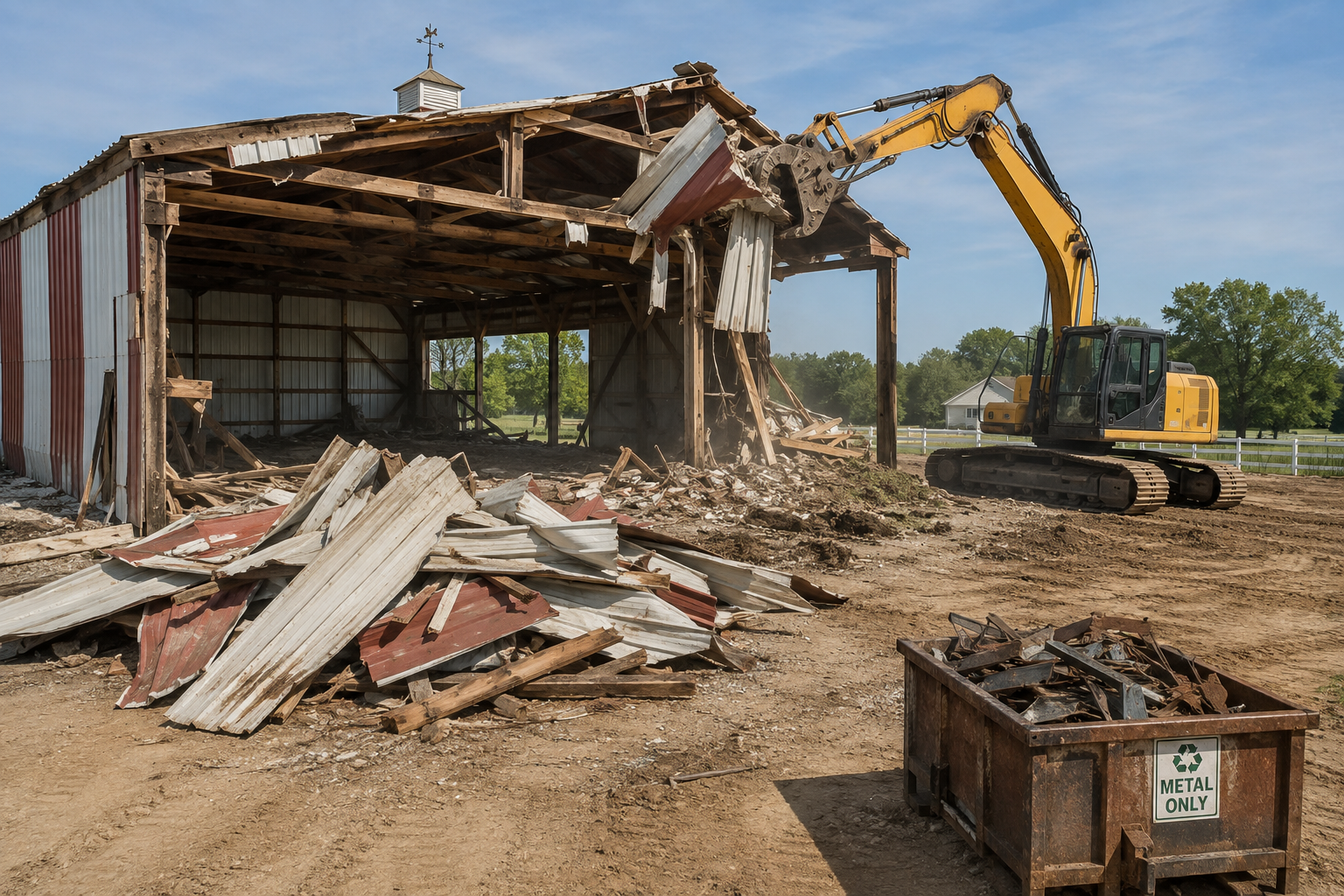
Shed, Shop, and Barn Demolition
Taking down pole barns, garages, sheds, and shops of wood or steel construction, dropping them in a controlled sequence, and separating material for recycling as the structure comes apart.
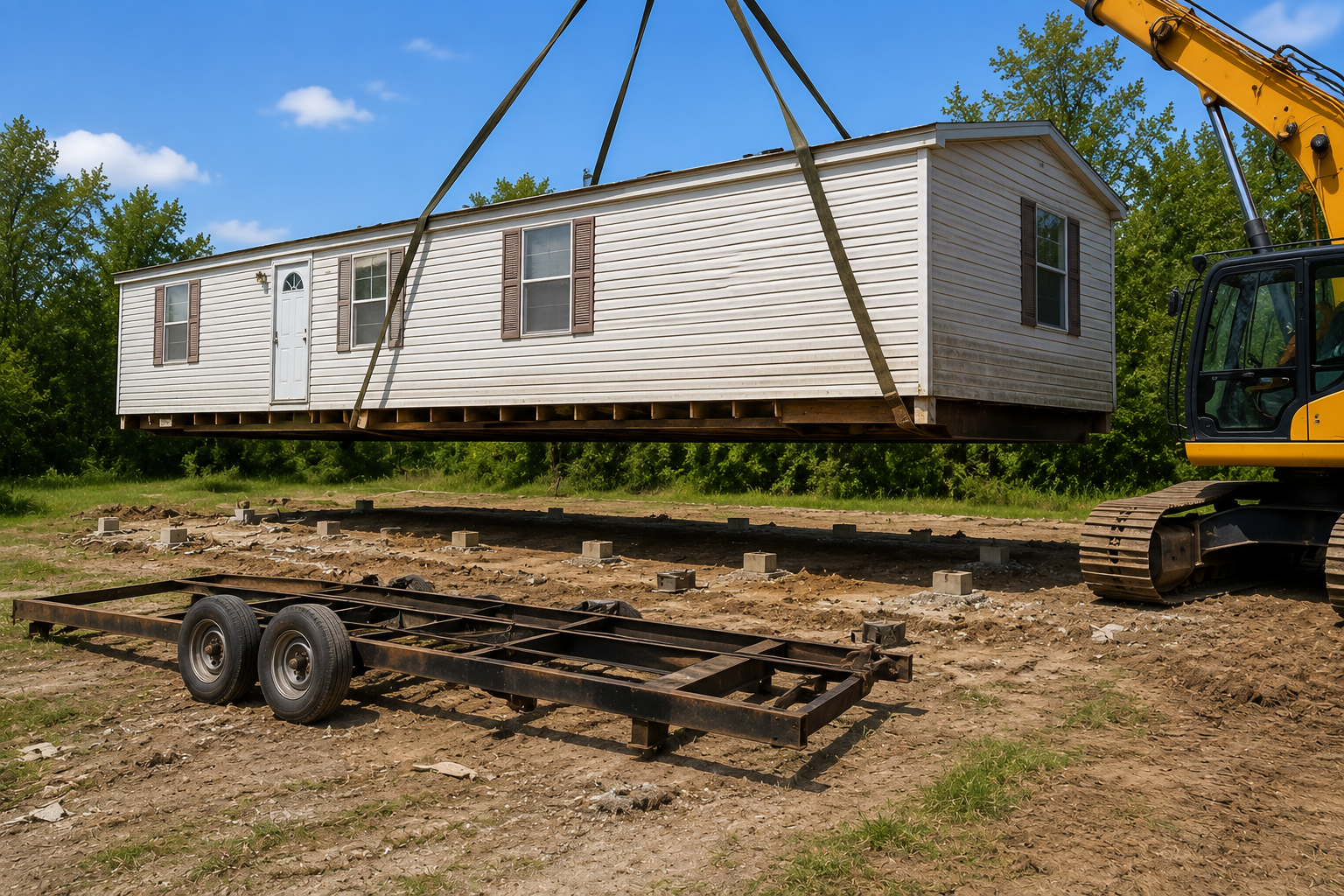
MANUFACTURED
Mobile and Manufactured Home Removal
Removing older mobile and manufactured homes including the frame, axles, skirting, tie-downs, and the pad or piers beneath, with the site restored so the space becomes usable ground again.
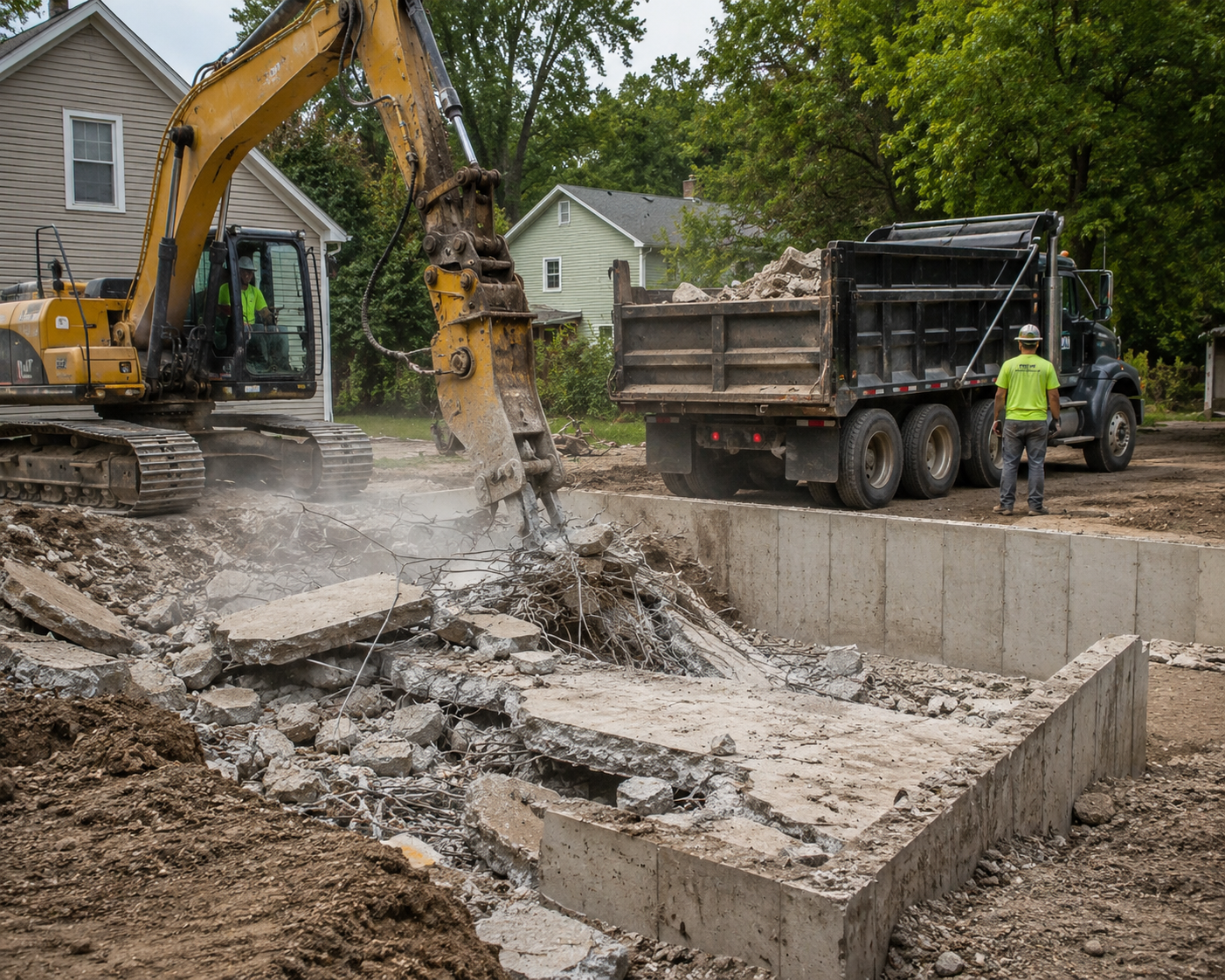
CONCRETE
Slab, Driveway, and Foundation Removal
Breaking out concrete slabs, driveways, sidewalks, footings, and stem walls, removing rebar and reinforcement with the material, and hauling clean concrete for recycling where a facility accepts it.
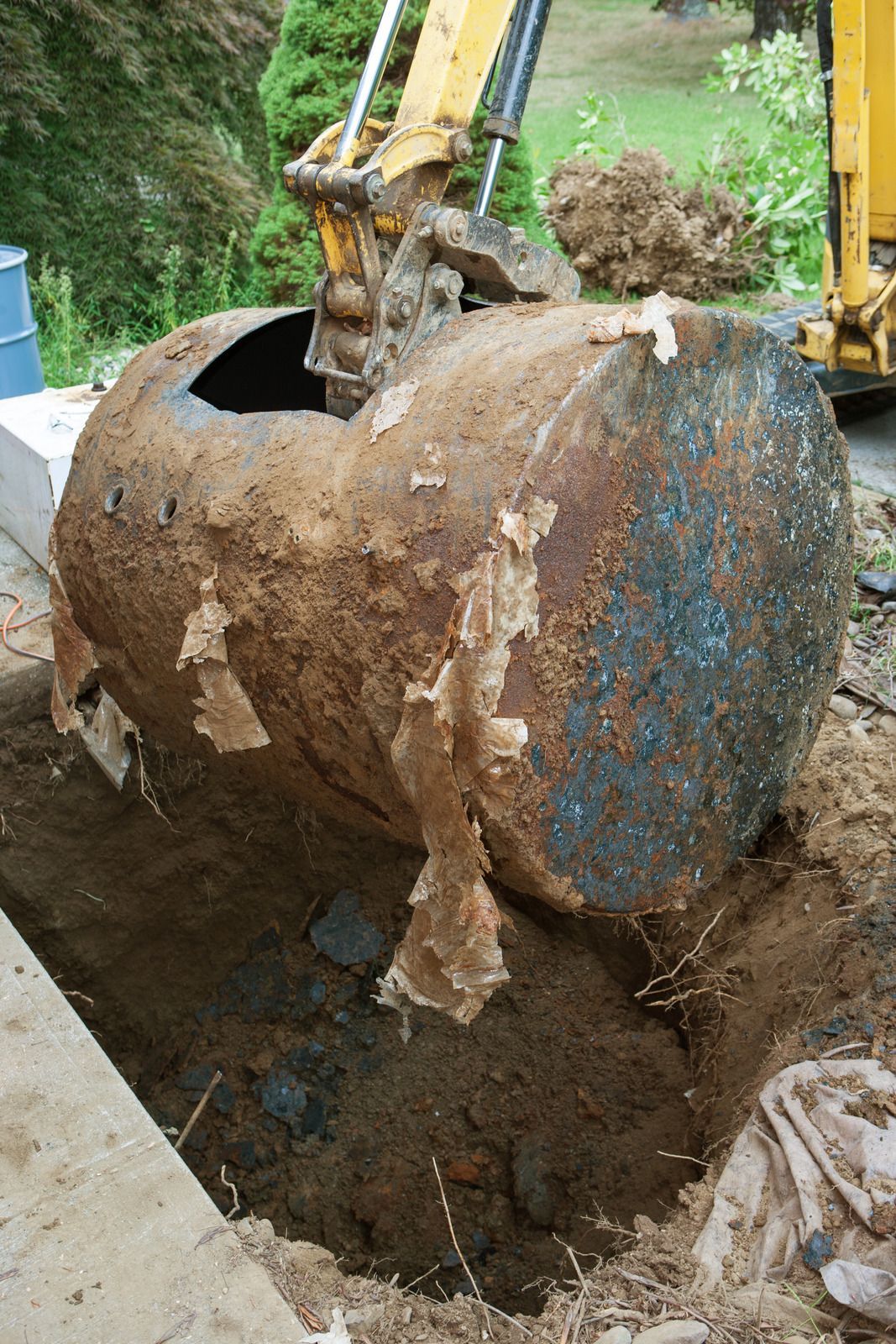
BELOW GRADE
Buried Structure and Tank Removal
Locating and removing abandoned septic tanks, cisterns, dry wells, buried debris pits, and old fuel tanks, with the resulting excavation backfilled and compacted rather than simply covered over.
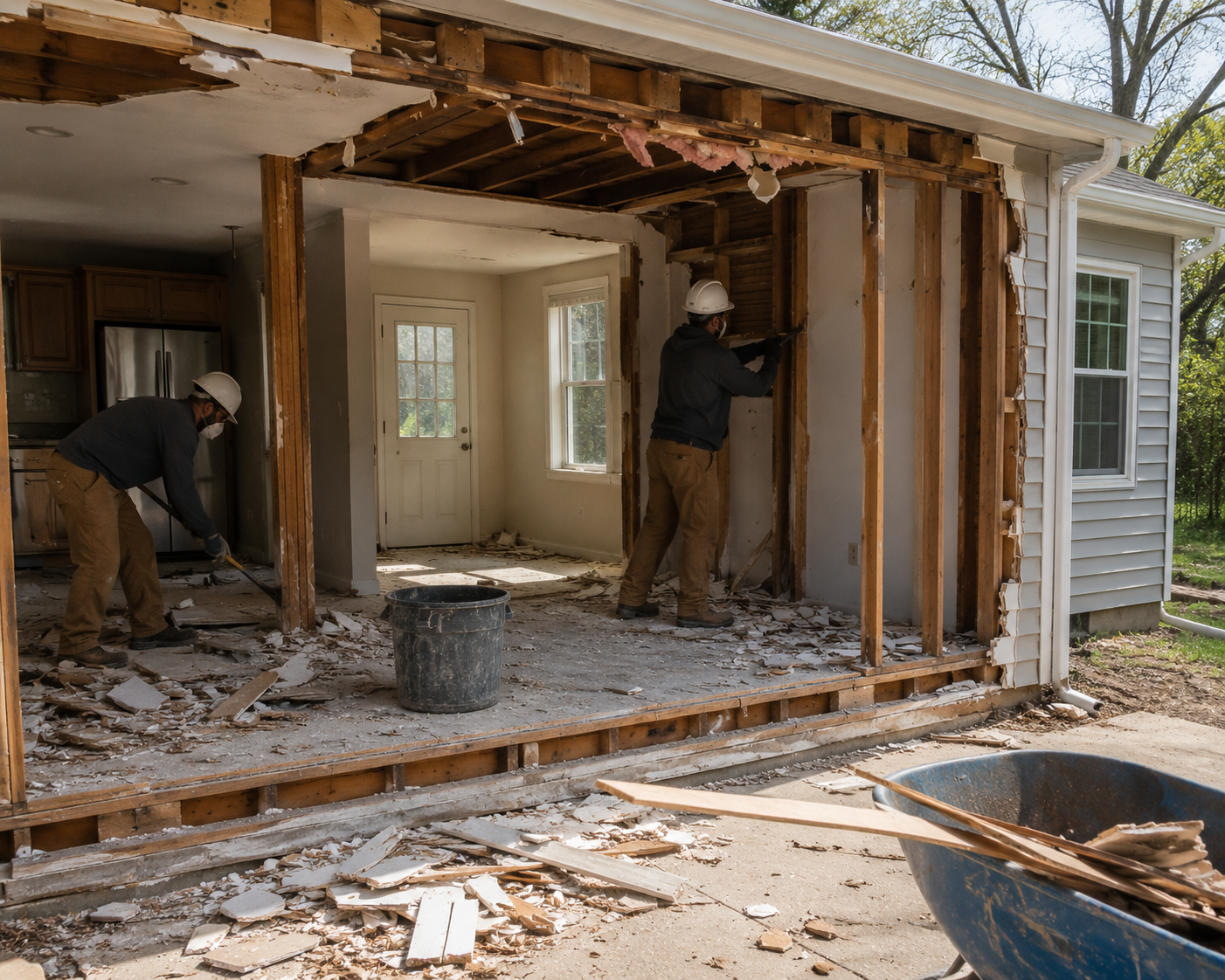
SELECTIVE
Partial and Interior Demolition
Removing a specific portion of a structure, an addition, a wall, a garage attached to a house, while protecting what stays standing and leaving clean edges for the rebuild to tie into.
AFTERWARD
Debris Removal and Site Restoration
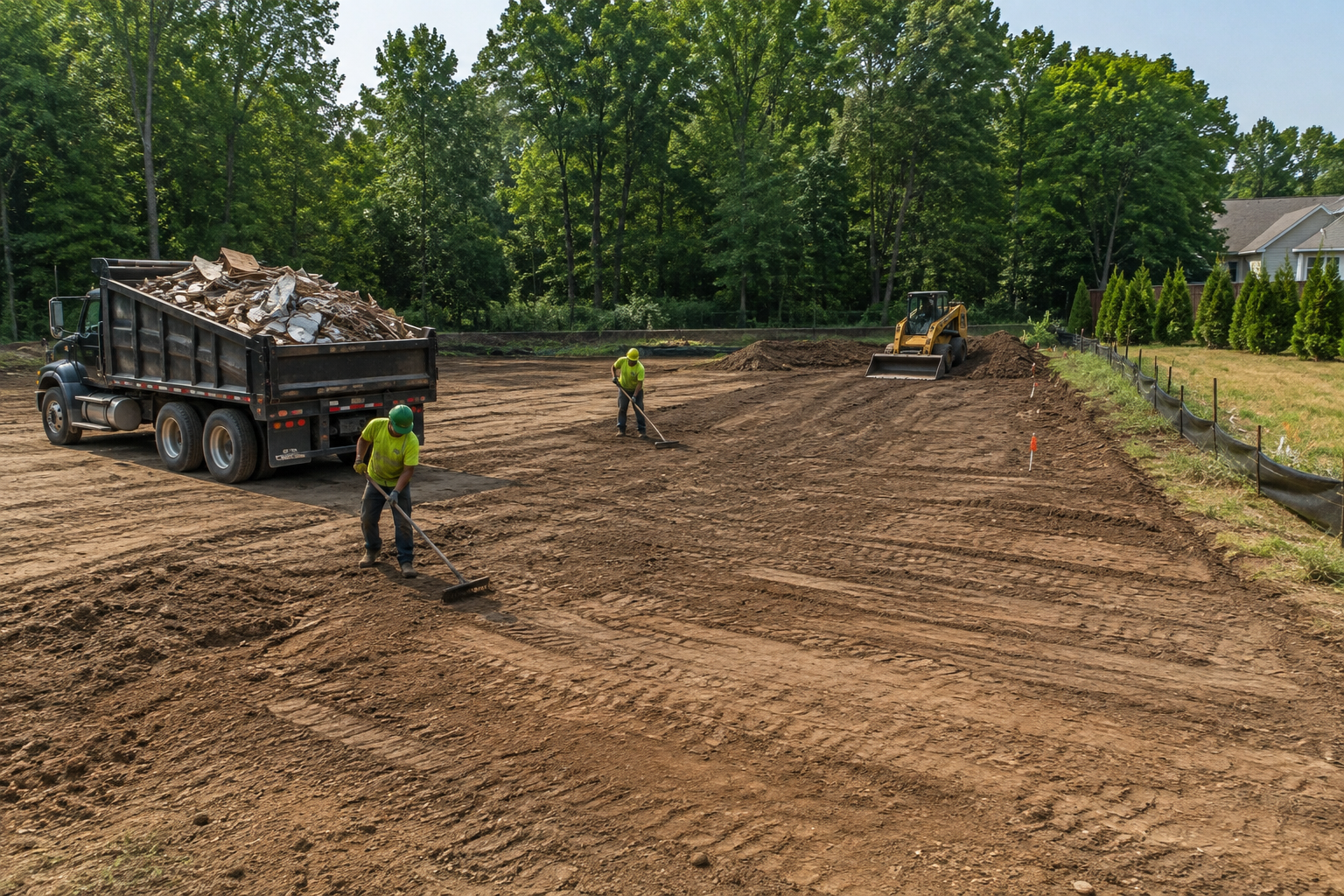
Hauling every load off the property, sorting for recycling, raking and sweeping the work area, backfilling voids, and grading the footprint so the finished ground drains and looks intentional.
➜ THE WORD ON OUR WORK
WHAT OUR CLIENTS SAY.
The comment we hear most after a demolition is some version of surprise that the yard looks finished. Removing a building is dramatic, but the part people remember is walking out afterward onto ground that does not look like a work site.
➜ Common Questions
FREQUENTLY ASKED QUESTIONS.
Demolition questions usually cover permits, hazardous materials, what happens to the debris, and how the ground gets left behind. Here are the ones we field most often.
Do I need a permit to demolish a building?
Usually yes for anything with a foundation or utilities. Permits typically require proof of utility disconnection and, on older structures, an asbestos survey. Requirements come from the city or county, and we identify them before scheduling. Older structures carry more steps.
What has to happen before demolition day?
Electric, gas, water, and sewer must be disconnected and capped by the serving providers, permits issued, and any required asbestos assessment completed. Those approvals normally set the schedule more than equipment availability does. Starting that process early is worth it.
Do you check for asbestos before demolition?
Structures built before roughly 1980 commonly require a survey by a certified inspector, arranged by the property owner. Where asbestos is present it must be removed by a licensed abatement contractor before demolition can proceed. Testing is quick and inexpensive.
What happens to the material after a building comes down?
Scrap metal, clean concrete, and untreated wood are separated for recycling where facilities accept them, and the remainder goes to a permitted transfer station or landfill. Sorting lowers total disposal cost on most jobs. Loads are separated as they leave.
Does demolition include removing the foundation?
It can, and it should if anything is being built on the same footprint. Dozer Construction & Landscaping, LLC removes slabs, footings, and stem walls on Moses Lake, WA properties, then backfills and compacts the resulting excavation. Nothing structural stays.
How long does it take to demolish a house or shop?
The teardown itself is often 1 to 2 days. Utility disconnection, permits, and asbestos assessment beforehand can add several weeks, and debris hauling and site restoration add another day or two afterward. Scheduling the approvals early shortens the whole timeline.
Can you demolish a structure that is close to another building?
Frequently yes, using smaller equipment and a controlled dismantling sequence rather than a straight push. Adjacent walls, shared fences, and utility lines get protected, which slows the work but keeps the neighboring structure intact. Access width often decides the method.
Will demolition damage my driveway or landscaping?
Equipment routes and debris staging are planned to limit disturbance, and finished surfaces can be matted for protection. Dozer Construction & Landscaping, LLC repairs or regrades anything disturbed inside the agreed work area on Moses Lake, WA properties.
➜ HOW WE WORK
FROM DISCONNECT TO FINAL GRADE, HERE IS HOW.
STEP 01
WE ASSESS THE STRUCTURE
Construction type, age, size, attached utilities, hazardous material risk, and access are all reviewed on site. That assessment determines the method, the sequence, and what has to happen before any date is set.
STEP 02
WE CLEAR THE PAPERWORK
Demolition permits, utility disconnect orders, and asbestos surveys are lined up in the right sequence. This is the phase that governs the calendar, and starting it early is what keeps a project moving.
STEP 03
WE STRIP THE SALVAGE
Anything worth keeping or recycling comes out first: fixtures, metal roofing, appliances, timber, and materials you want retained. Removing them before the machine starts is far easier than sorting through a pile.
STEP 04
WE BRING IT DOWN
The structure is taken apart in a controlled sequence, working away from anything that stays standing, with dust suppression and debris kept inside the property line throughout the operation.
STEP 05
WE DIG OUT WHAT IS BURIED
Slabs, footings, stem walls, piers, tanks, and utility stubs are excavated and removed, so nothing is left underground to obstruct the next project on that footprint.
STEP 06
WE BACKFILL AND FINISH
The excavation is filled with suitable compacted material, the surface is graded to drain, debris is hauled, and the area is raked clean so the property reads as finished rather than cleared.
➜ GET YOUR FREE ESTIMATE
SHOW US WHAT IS COMING DOWN, AND THE QUOTE IS FREE.
Demolition pricing depends on what the structure is made of, what is buried under it, and how the ground has to look afterward, none of which can be judged from a photograph. Tell us what is coming down and what the space is for next. We will look at it, flag any permit or hazardous material steps, and write a scope that carries through to the finished grade. Contact page or quote form, either works.
WHAT YOUR DEMOLITION QUOTE COVERS:
- Structure type, size, and method
- Utility disconnect and permit steps
- Hazardous material assessment if required
- Debris sorting, hauling, and disposal
- Foundation and buried element removal
- Backfill, compaction, and finished grade