➜ Water & Sewer Lines
WATER & SEWER LINES IN Moses Lake, WA
A gravity sewer lateral runs on fall alone, and a line laid flat or with a belly in it will hold solids no amount of pressure clears. Dozer Construction & Landscaping, LLC installs water and sewer service in Moses Lake, WA: new lines, replacements, city main tie-ins, septic to sewer conversions, meter and cleanout setting, and the trench work each one depends on. Licensed and insured, with 11 years of connections built to pass on the first inspection.
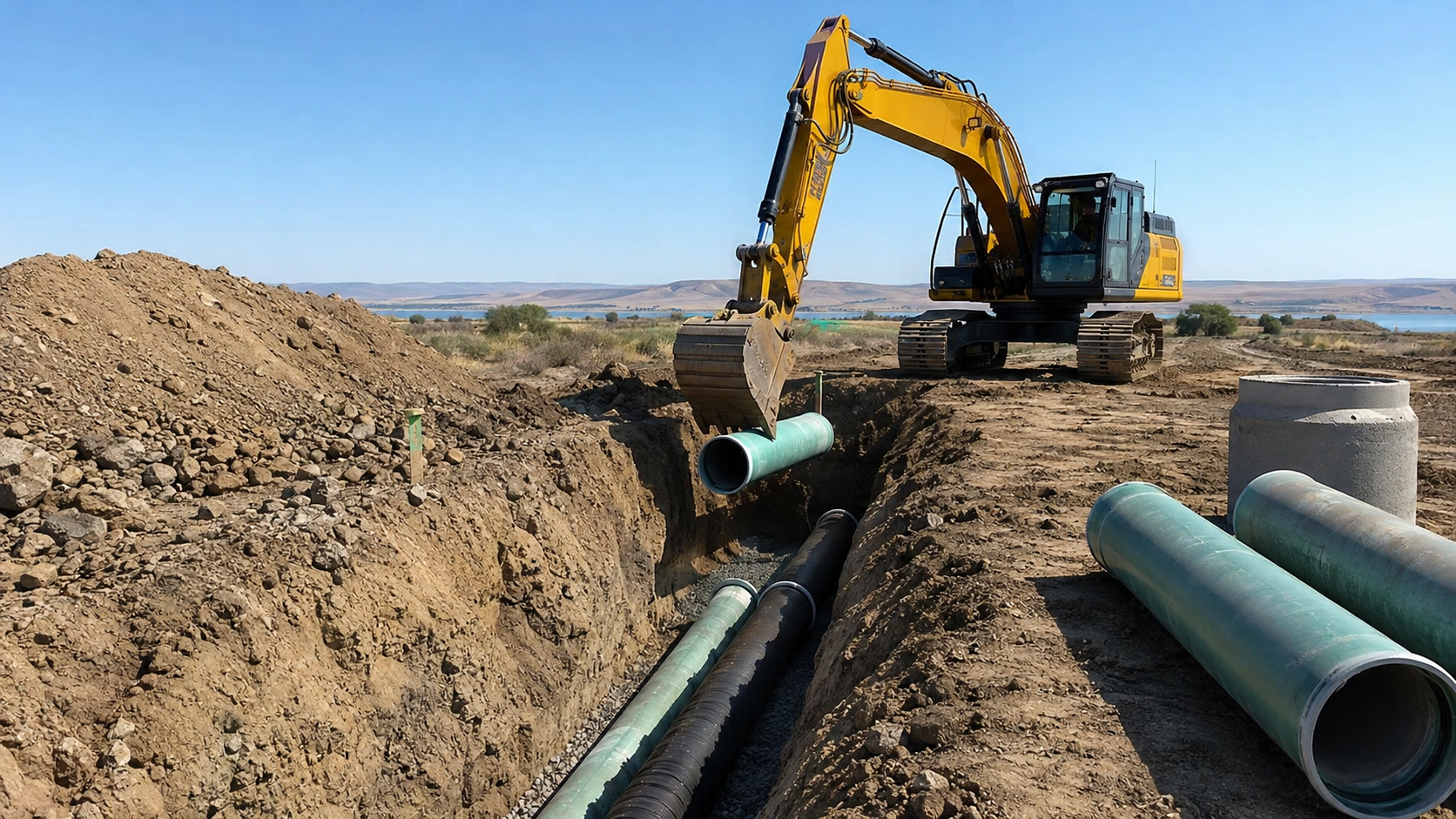
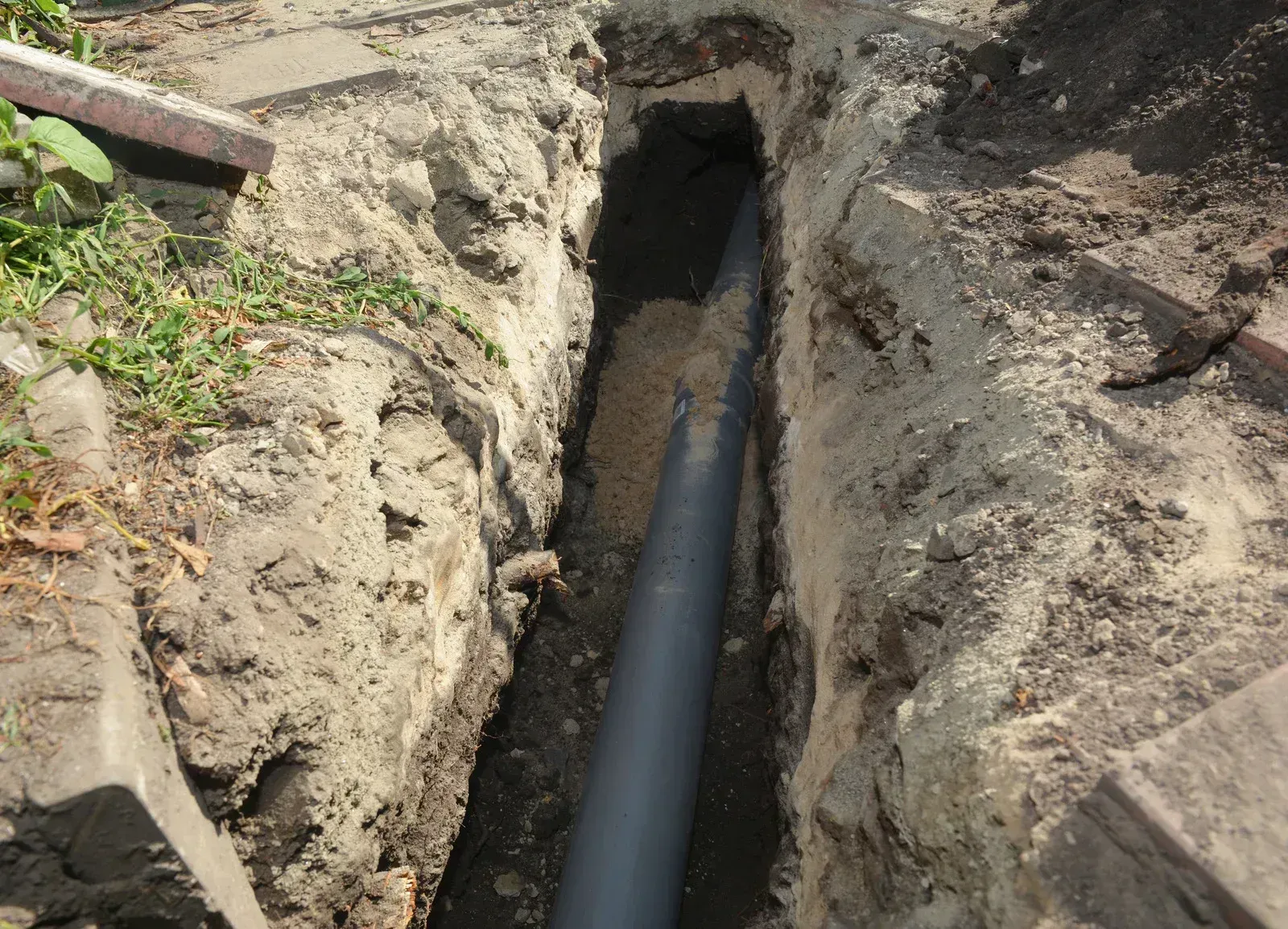
GRAVITY IS THE ONLY THING MOVING A SEWER LINE.
Water lines are relatively forgiving. They are pressurized, so as long as they sit below frost, are bedded properly, and hold a pressure test, the route can bend around obstacles. Sewer is the opposite. It runs on gravity, at a fall that has to be continuous from the structure to the connection point, with no low spots anywhere along it.
That single constraint drives everything else: the depth at the house, the route across the property, the trench depth at the main, and whether a pump is needed at all.
- Continuous fall verified on gravity lines
- Water service below local frost depth
- Separation from other utilities maintained
- Cleanouts and fittings set for access
➜ WATER & SEWER LINES
THE CONNECTION IS THE PART THE CITY INSPECTS.
Anyone can trench across a yard. The work that requires attention happens at each end: the tap or tie-in at the main, the meter setter, the transition at the building, and the cleanouts that let someone service the line for the next 50 years. Those points carry the permit, the inspection, and the failure risk, so they get built to the utility's detail rather than to whatever is convenient in the trench.
MOSES LAKE MAINS, GRANT COUNTY RULES.
Connection requirements are local. Tap sizes, materials, bedding specification, cleanout spacing, meter box type, backfill standards, and who is permitted to touch the main all vary between the City of Moses Lake, WA and the county and district systems around it. Knowing which set of rules applies before pricing a job is what keeps the estimate honest and the inspection visit short.
INSPECTORS HERE KNOW WHAT WE HAND THEM.
A relationship with an inspection department is built one clean trench at a time: correct depth, correct bedding, cleanouts where they belong, and nothing covered before it is seen. 11 years of doing it that way means our inspections are usually short conversations rather than negotiations. That saves days on a build calendar, which is where it really shows. Are you connecting a new build or replacing an old line?
WHAT A DONE-RIGHT SERVICE LINE DELIVERS
Drains That Keep Working
Continuous fall with no bellies means solids move the way the system was designed to move them, instead of collecting at a low point and producing backups every few months.
Water Pressure You Can Count On
A correctly sized service line, installed without kinks or crushed sections and pressure tested before backfill, delivers the volume the fixtures inside the building were designed around.
No Freeze Failures In January
Lines set below the local frost depth stay liquid through Central Washington winters, avoiding the split pipe and emergency excavation that a shallow service eventually produces.
Access For Future Service
Cleanouts placed at the right intervals and at direction changes let a plumber clear or camera the line later without excavating the yard to find where the problem sits.
A Line That Passes Inspection
Materials, depth, separation, bedding, and testing that match the local specification mean the inspection is a formality rather than a rescheduled visit with the trench sitting open.
Yard Restored, Not Just Refilled
Compacted backfill and a restored surface mean the line route is not a permanent depression across the lawn or a soft strip under the driveway a year later.
➜ WHAT WE CONNECT
OUR WATER AND SEWER WORK
Service line work covers new construction, replacement, and conversion. These six make up nearly all of what gets requested on residential and commercial properties around the Basin.
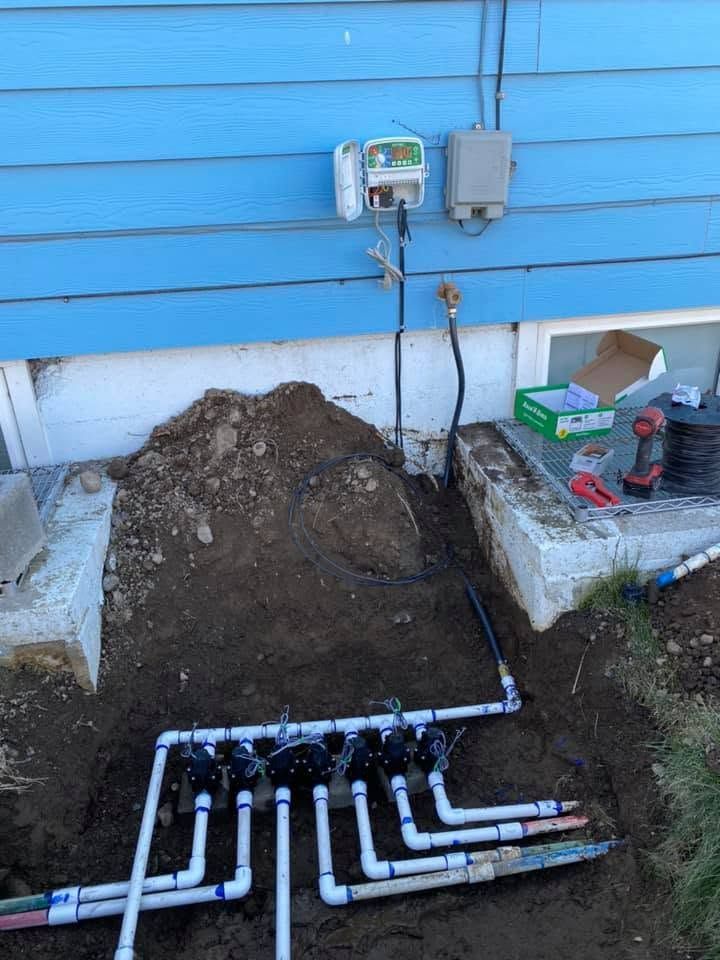
NEW BUILDS
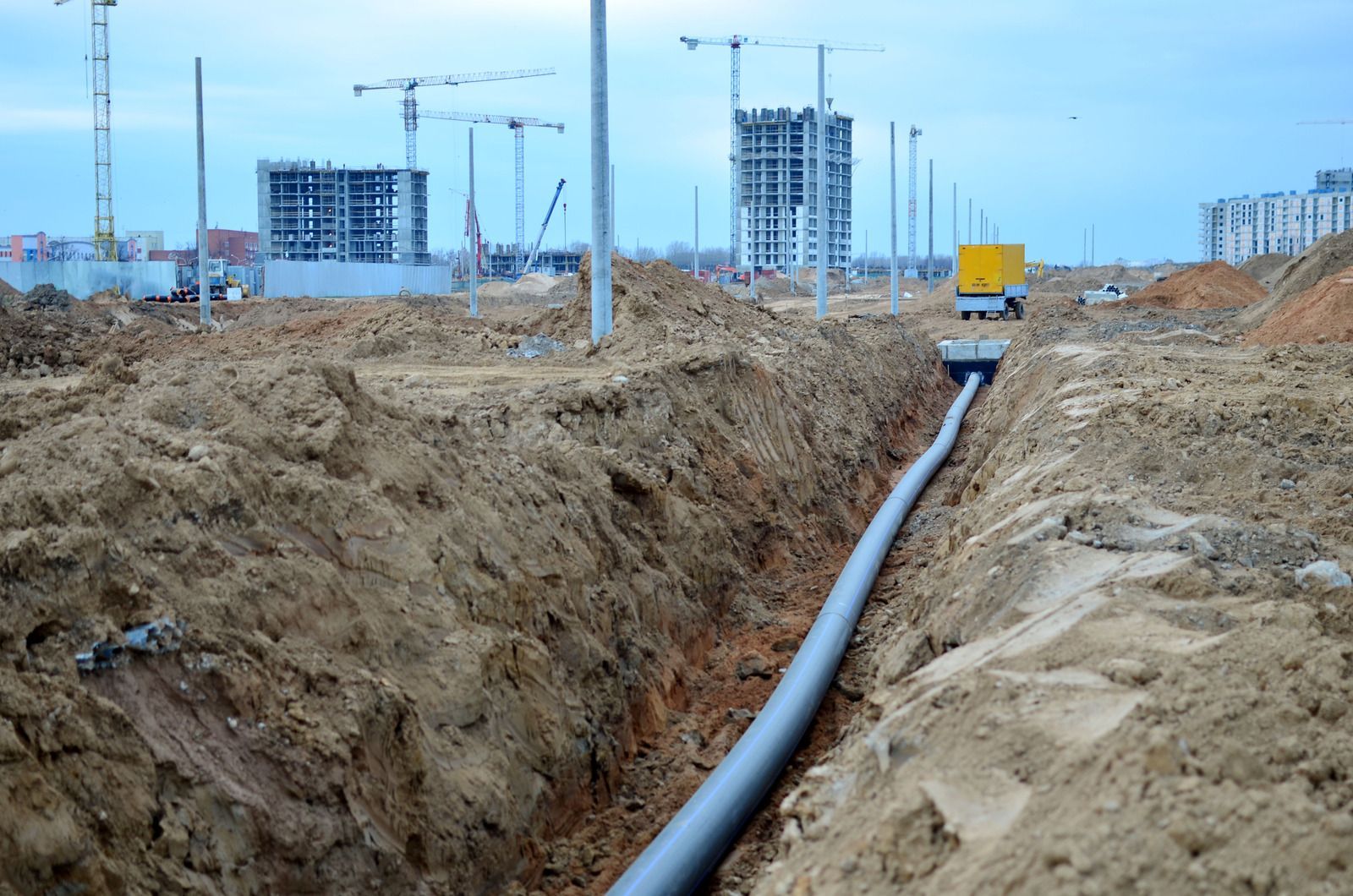
New Water Service Installation
Running a new water service from the main or meter to the structure at the correct size and depth, bedded, pressure tested, and coordinated with the meter setting and the plumbing rough-in.
NEW LATERALS
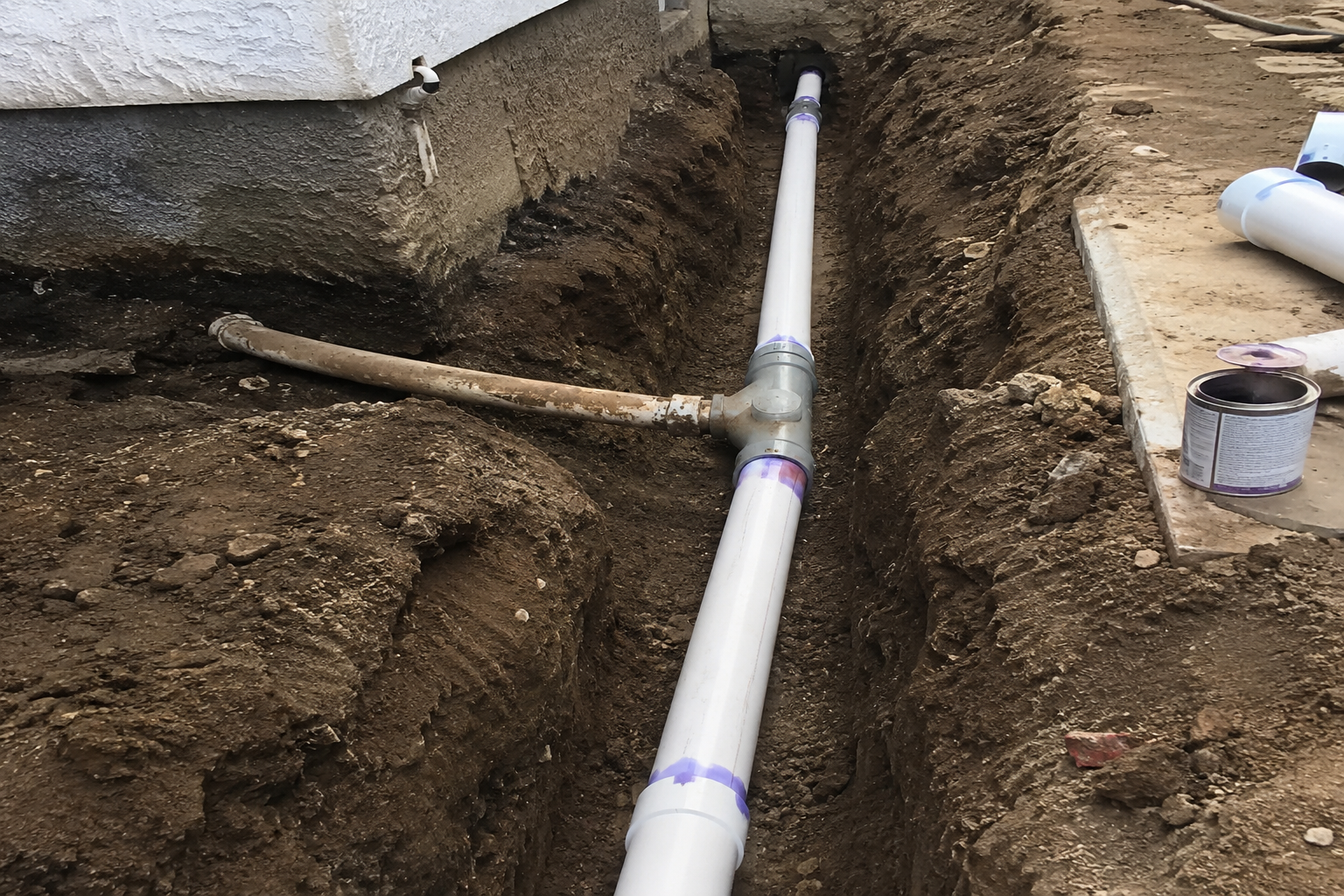
New Sewer Lateral Installation
Installing a gravity sewer lateral from the building to the connection point at continuous fall, with cleanouts at the required intervals and the tie-in built to the utility's connection detail.
REPLACEMENT
Service Line Replacement
Removing and replacing failing, undersized, or aging water and sewer lines, including galvanized and older clay or cast material, with modern pipe sized for the property's actual demand.
CONVERSION
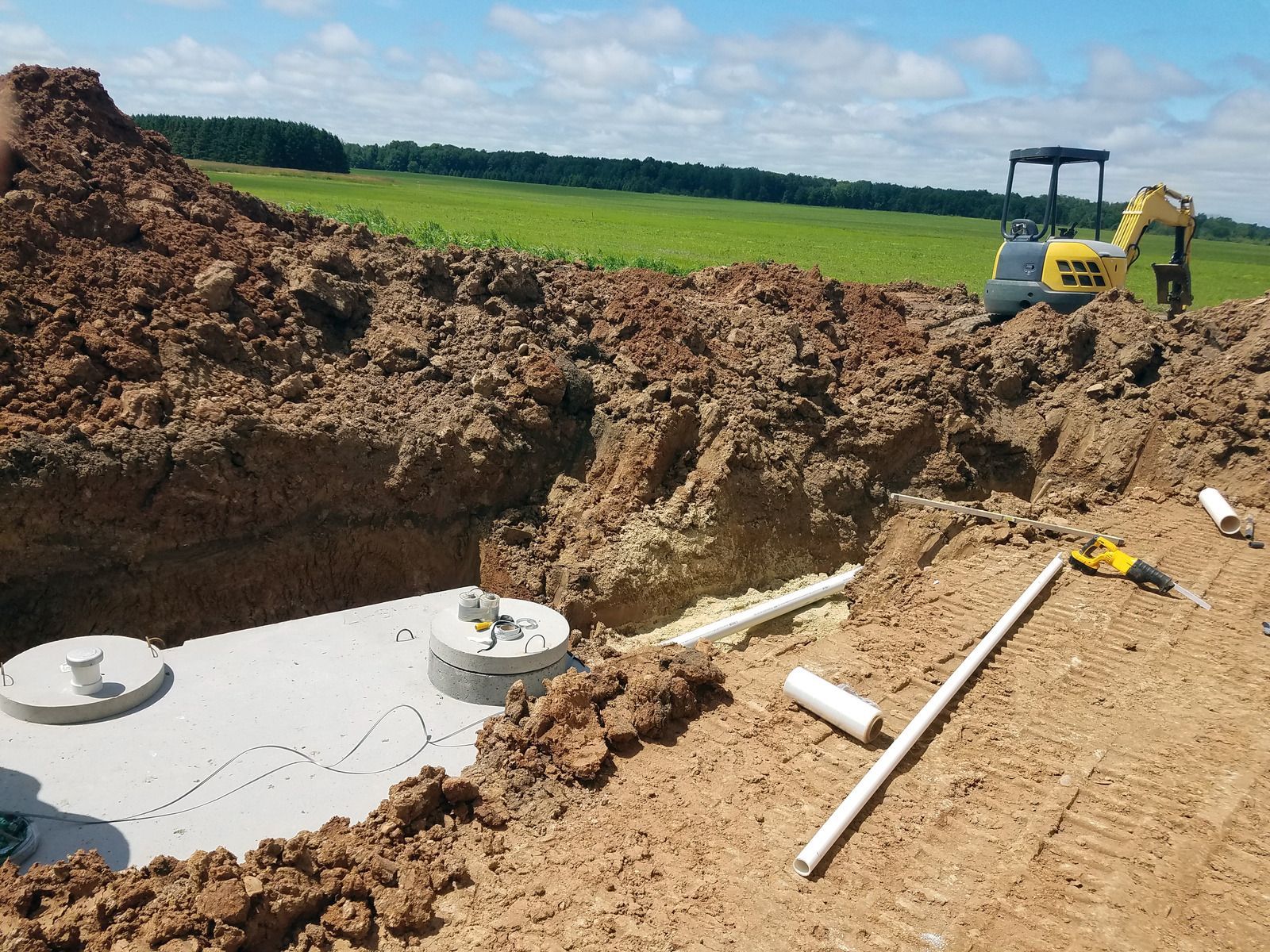
Septic to Sewer Conversion
Decommissioning an existing septic tank and drain field to code, installing the new sewer lateral, tying into the city main, and restoring the ground where the old system was removed.
AT THE MAIN
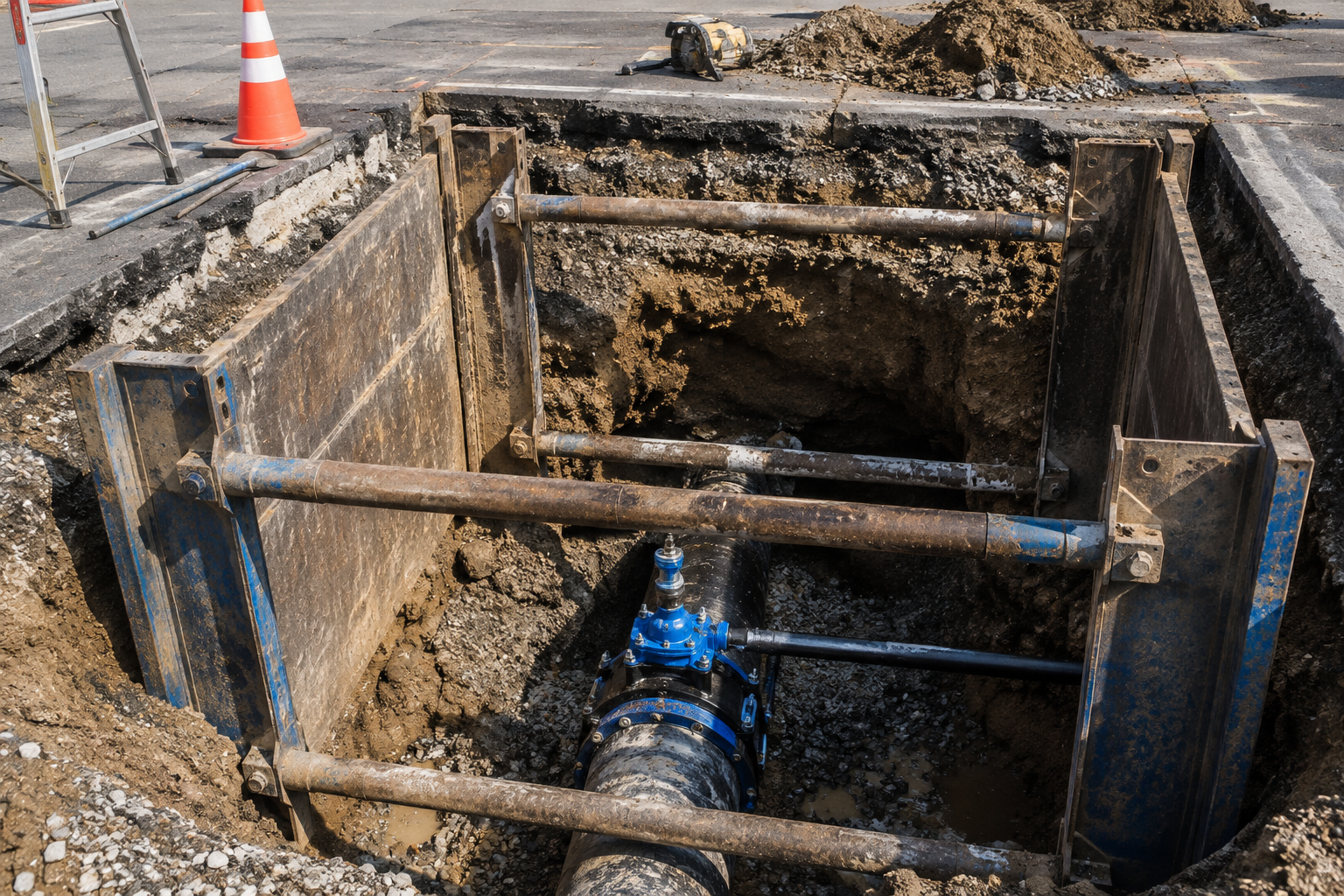
Main Tie-Ins and Tap Excavation
Excavating and shoring at the main for the connection, coordinating with the utility on the tap, and restoring pavement or right-of-way surface to the standard the jurisdiction requires.
ACCESS POINTS
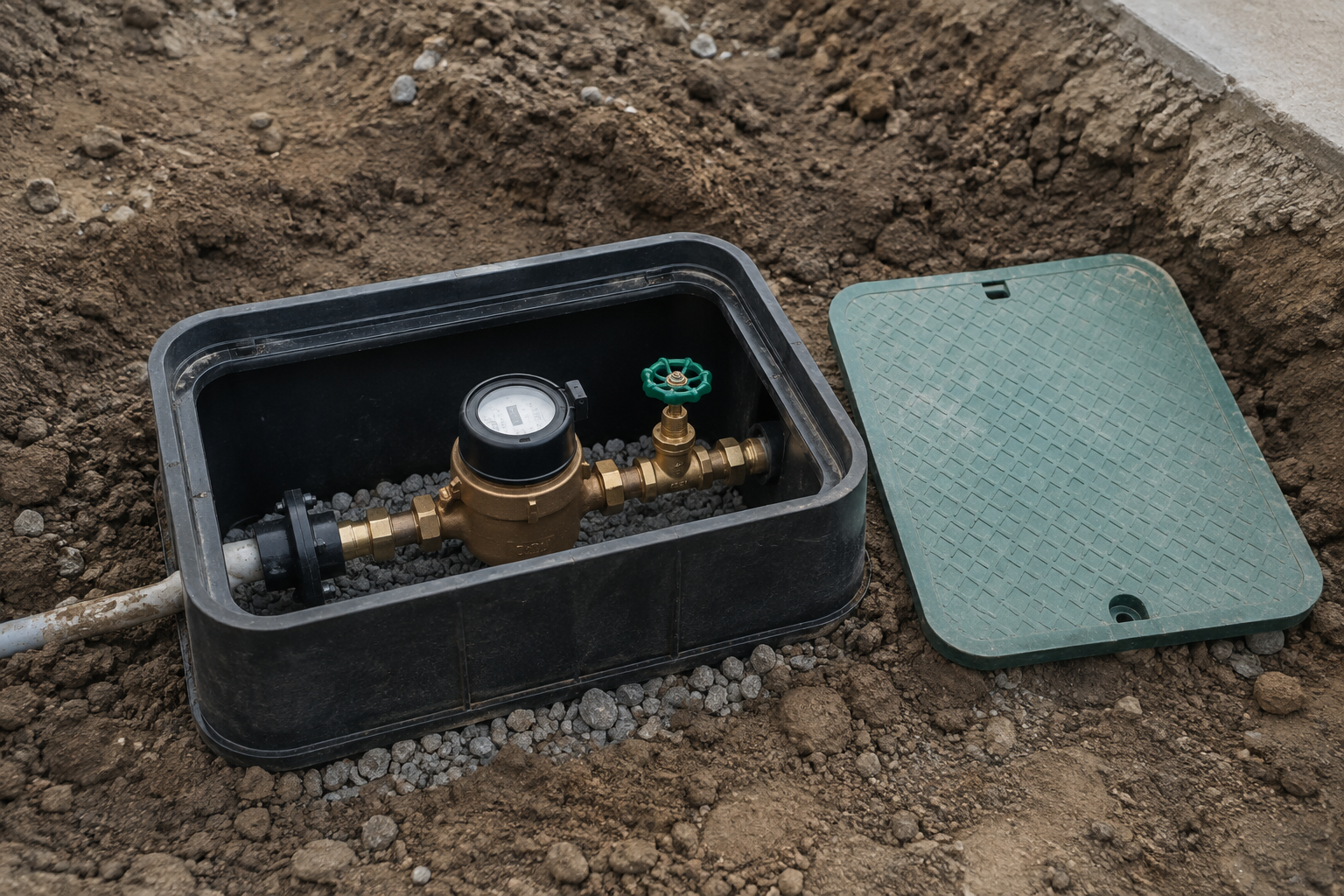
Cleanouts, Meter Boxes, and Vaults
Setting cleanouts, meter boxes, valve boxes, and vaults at the correct elevation and location so they stay accessible, do not fill with debris, and survive traffic where they sit in a drive.
➜ THE WORD ON OUR WORK
WHAT OUR CLIENTS SAY.
Nobody thinks about a service line until it fails, which means the compliment we get is unusual: silence. The best feedback on this work is a customer who has had no reason at all to call us about it in years.
➜ Common Questions
FREQUENTLY ASKED QUESTIONS.
Service line questions usually cover depth, slope, permits, and how much of the yard actually gets disturbed. These are the ones that come up most often.
How much fall does a sewer line need?
Standard practice for a 4-inch residential lateral is about a quarter inch of fall per foot of run. Too little causes solids to settle, and surprisingly, too much can let liquid outrun them. The full run gets shot with instruments.
How deep is a water service line buried?
Below the local frost depth, which across Washington is commonly taken as around 24 inches, and often deeper where the line crosses a driveway or where the utility specification requires it. The local utility specification confirms the exact figure before installation.
How do I know if my sewer line needs replacing or just repair?
Repeated backups, root intrusion at multiple joints, bellies visible on a camera inspection, and older clay or cast material together point toward replacement. A single localized break is usually a spot repair. A camera inspection is the reliable way to tell.
Can a sewer line be installed without digging up the whole yard?
Sometimes. Trenchless methods work in the right conditions, but a gravity line needs verified continuous fall, so open trench remains common. The route is planned to keep disturbance narrow either way. The method gets chosen after the grade is checked.
What is involved in converting from septic to city sewer?
The septic tank is pumped and decommissioned to code, a new lateral is run to the main, the connection and inspection are completed, and Dozer Construction & Landscaping, LLC restores the ground in Moses Lake, WA afterward. Permits come first.
Who is responsible for the service line, the city or the property owner?
Typically the property owner owns and maintains the line from the structure to the connection point at the main, though the exact division varies by jurisdiction and is worth confirming before work begins. The jurisdiction can confirm it in writing.
Is a permit required to replace a water or sewer line?
Almost always. Connection permits, right-of-way permits for work near the main, and inspection scheduling are usually all required. We identify which apply and handle the coordination on the projects we run. Inspection points get scheduled at the same time.
How long does a service line replacement take?
Most residential replacements run 1 to 3 days of field work once permits are issued and locates are complete. Dozer Construction & Landscaping, LLC schedules Moses Lake, WA jobs around driveway crossings and main tie-ins, which extend that timeline.
➜ HOW WE WORK
FROM PERMIT TO PRESSURE TEST, HERE IS HOW.
STEP 01
WE CONFIRM THE REQUIREMENTS
Which utility owns the main, what the connection detail specifies, what materials are approved, what permits are needed, and where the inspection points sit. All of that is settled before a date is offered.
STEP 02
WE SET THE GRADE
For sewer, the elevation at the building and at the connection point are shot and the fall is verified across the whole run. If gravity does not work, that is known before the trench is opened.
STEP 03
WE LOCATE AND OPEN
Locate tickets are cleared, the route is exposed carefully around marked utilities, and the trench is cut to depth with sloping or shielding wherever the excavation reaches a depth that requires it.
STEP 04
WE BED AND LAY PIPE
Bedding is placed, pipe is laid to the verified grade, joints are made to specification, and cleanouts and fittings are set at the intervals the local code and the plumbing layout require.
STEP 05
WE TEST AND GET IT SEEN
Water lines are pressure tested, sewer lines are checked for fall and tightness, and the inspector reviews the open trench. Nothing gets covered until that sign-off has actually happened.
STEP 06
WE BACKFILL AND RESTORE
Backfill goes in as compacted lifts, the surface is rebuilt to match what was there, driveways and right-of-way areas are restored to the standard required, and the route is graded to drain.
➜ GET YOUR FREE ESTIMATE
ASK US ABOUT YOUR CONNECTION, AND THE QUOTE IS FREE.
Service line pricing depends on run length, depth, what the route crosses, and which utility rules apply at the connection. Tell us the property address, whether it is a new build, a replacement, or a septic conversion. We will check the connection requirements, walk the route, and hand you a written scope covering the trench, the pipe, the tie-in, and the surface restoration. Reach us on the contact page or quote form.
WHAT YOUR SERVICE LINE QUOTE COVERS:
- Run length, depth, and required fall
- Pipe material and size to specification
- Permit and inspection coordination
- Main tie-in or meter connection work
- Cleanouts, boxes, and access fittings
- Backfill, compaction, and surface restoration