
➜ Utility Trenching & Hookups
UTILITY TRENCHING & HOOKUPS IN Moses Lake, WA
Since January 2026, Washington excavators may not break ground until every utility operator has posted a positive response to the locate ticket, not merely been notified. Dozer Construction & Landscaping, LLC trenches to that standard across Moses Lake, WA: water, sewer, power, gas sleeves, irrigation mains, communications conduit, bedding, backfill, compaction, and coordination with the trades making the connections. Licensed and insured, with 11 years of trenches across Grant County that have stayed exactly where we put them.
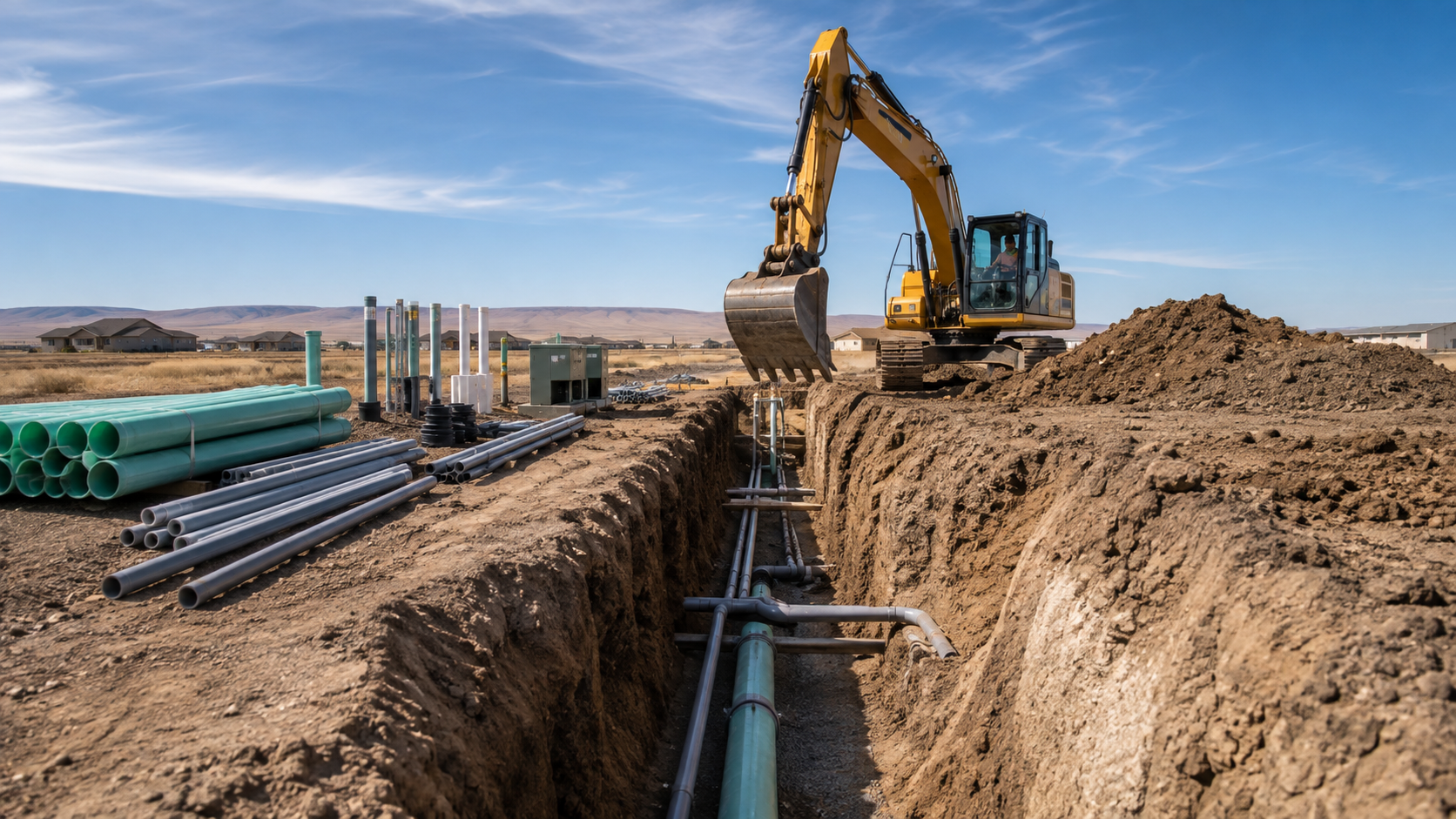
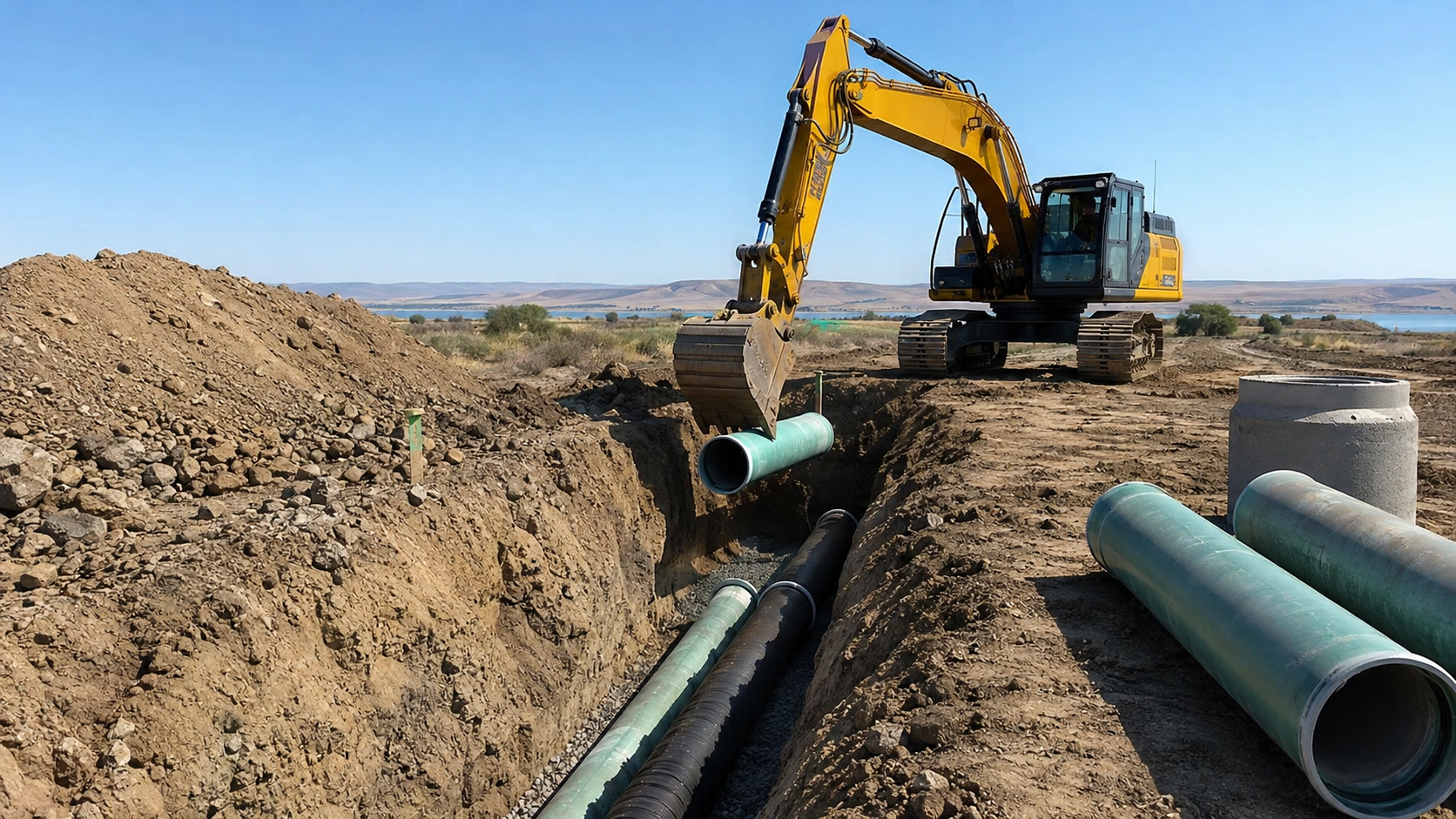
THE EXPENSIVE MISTAKES ARE ALL UNDERGROUND.
A trench is judged entirely on things nobody can see once it is closed. Whether the pipe was bedded on sand or dropped onto rock. Whether the required separation between a water line and a sewer line was held. Whether backfill went in as compacted lifts or as one push of the loader bucket.
None of those show on the day the machine leaves. They show up as a settled strip across a lawn, a service line that fails early, or a contamination risk that an inspector catches at the worst possible moment.
- Positive response confirmed before digging
- Bedding under and around the pipe
- Required separation between utilities held
- Backfill compacted in measured lifts
➜ UTILITY TRENCHING & HOOKUPS
DEPTH, SEPARATION, AND BEDDING ARE NOT SUGGESTIONS.
Every buried utility carries its own rules, and they exist because the failures they prevent are expensive. Water lines below frost so they do not freeze. Sewer at a controlled fall so gravity works. Power at the depth and separation the serving utility specifies, with warning tape above it. Gas in a sleeve, marked. We build each trench to the standard belonging to what is going in it, not to a single generic depth.
ONE CREW FOR THE TRENCH AND THE TIE-IN.
Utility work goes wrong at the handoffs, where the trenching contractor leaves and the connecting trade arrives to find the wrong depth, the wrong width, or a trench that has already caved. Running the excavation and the applicable connection work together removes that gap. Property owners around Grant County generally prefer having one number to call rather than coordinating three dirt contractors on one project.
THE TRENCH IS WHERE THE LESSONS GET LEARNED.
Unmarked private lines, irrigation laterals nobody documented, an old service that was abandoned in place but never disconnected. 11 years of opening ground in this valley teaches you to expect the undocumented and to dig the last foot carefully around anything marked. Careful is slower, and it is considerably cheaper than a repair crew, an outage, and an afternoon of apologies to the neighbors. What are you connecting?
WHAT A PROPERLY BUILT TRENCH DELIVERS
Service That Lasts Decades
Pipe and conduit bedded correctly and backfilled without rock loading are not carrying stress they were never designed for, which is the single biggest factor in how long a buried line survives.
Ground That Does Not Settle
Compacted lifts mean the strip above the trench stays level with the surrounding yard, driveway, or field instead of sinking into a visible rut over the first 2 winters.
Inspections Without Rework
Depth, separation, bedding material, and marking tape are what an inspector looks for. Getting them right the first time avoids reopening a trench that was already backfilled and finished.
Safe Distance From Other Utilities
Correct horizontal and vertical separation protects a water line from sewer contamination and keeps power away from wet utilities, which is a health requirement rather than a preference.
Less Yard To Repair Afterward
A planned trench route, controlled spoil placement, and prompt backfill mean the restoration is a narrow strip rather than a construction zone across the entire property.
One Point Of Responsibility
When the same crew digs, beds, backfills, and coordinates the connection, there is no argument later about which contractor caused the settlement or the failed inspection.
➜ WHAT WE TRENCH
OUR UTILITY TRENCHING WORK
Trenching covers everything that runs underground between a source and a structure. These six make up most of the utility work we handle on residential, commercial, and agricultural sites.
WATER AND WASTE
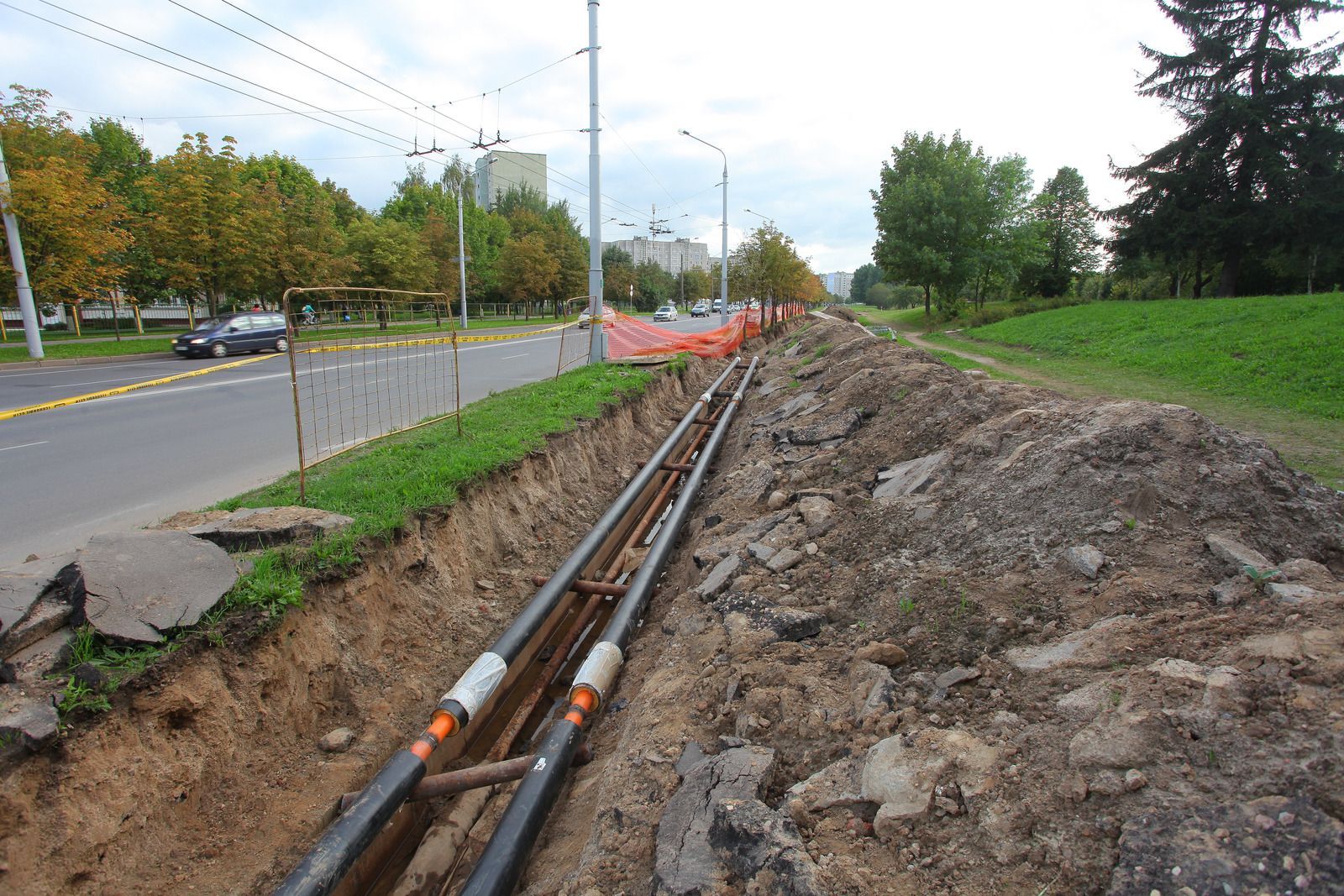
Water and Sewer Trenching
Excavating to the depth and grade water and sewer lines require, with sand bedding, controlled fall on gravity lines, and trench widths that let the plumbing trade work safely in the excavation.
ELECTRICAL
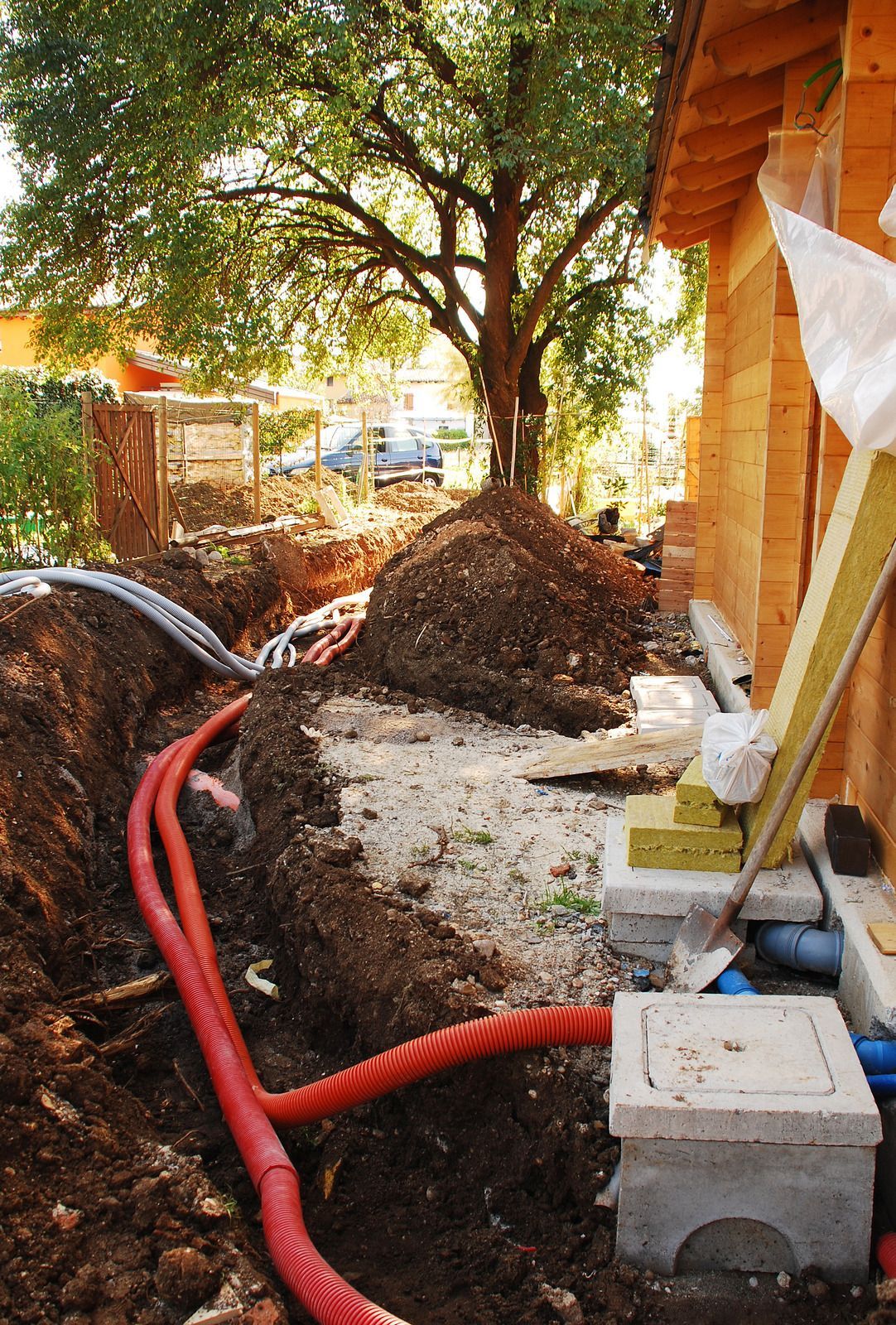
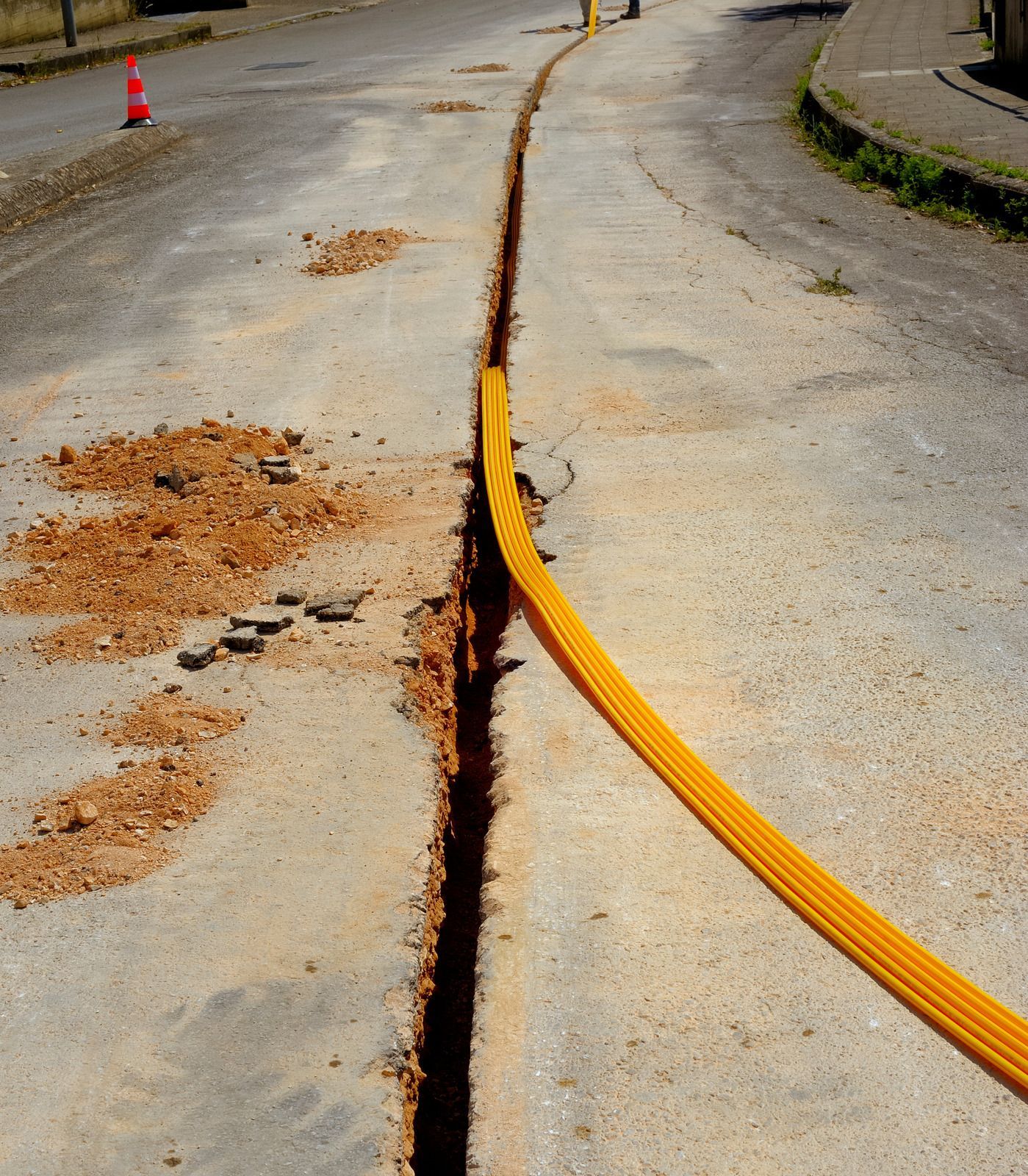
Power and Conduit Trenching
Cutting trenches for service laterals and conduit runs at the depth the serving utility specifies, with sand bedding, warning tape placed above the line, and separation from wet utilities maintained.
LOW VOLTAGE
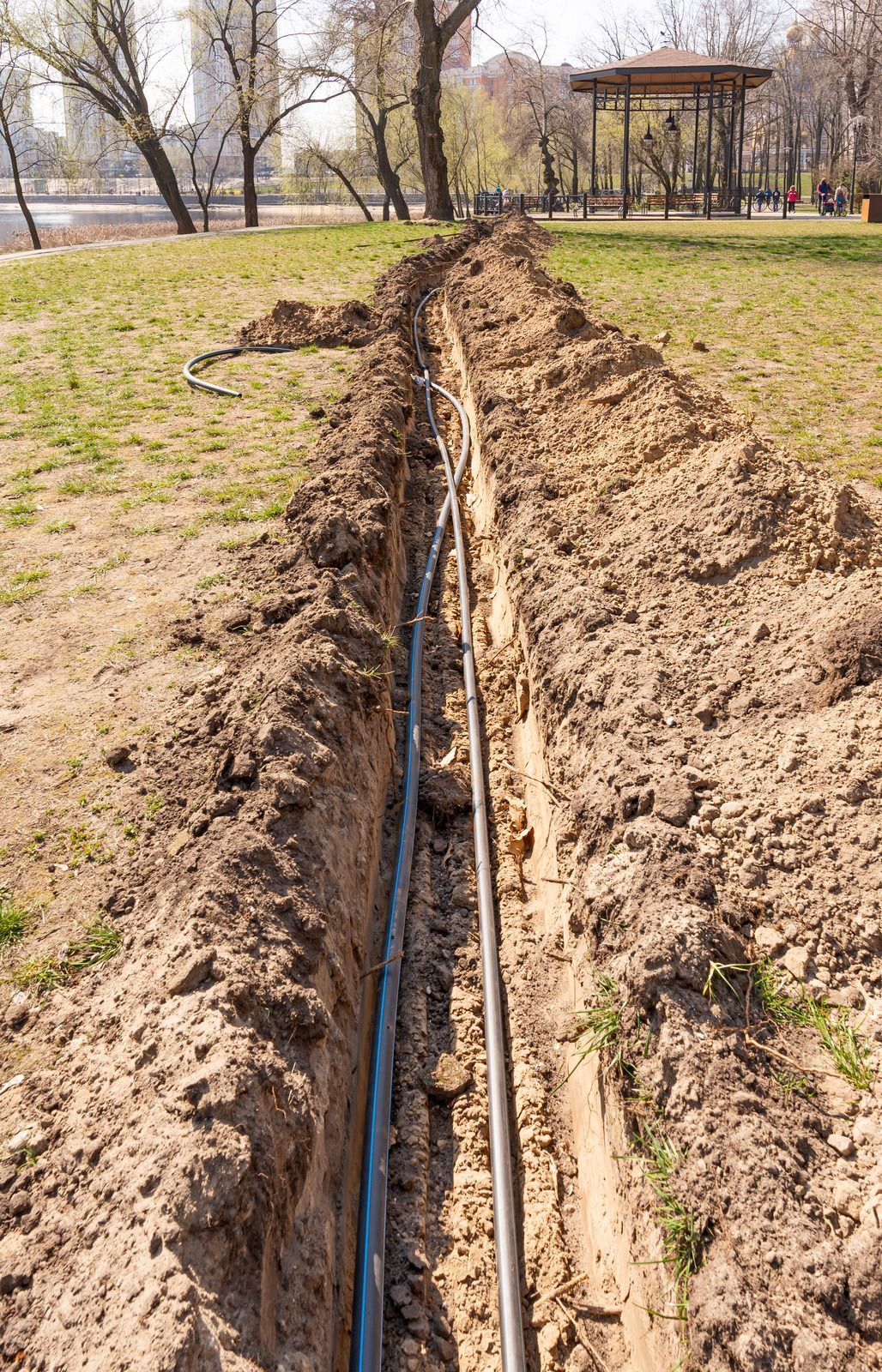
Communications and Fiber Trenching
Installing conduit and pull strings for internet, phone, security, and control wiring, run in the same corridor as other utilities where separation rules allow so one trench serves several purposes.
IRRIGATION
Irrigation and Water Main Trenching
Trenching for mainlines, laterals, stock water, and pivot supply across yards and acreage, with depths set to avoid tillage damage and freeze exposure on the lines that stay charged year-round.
CONNECTIONS
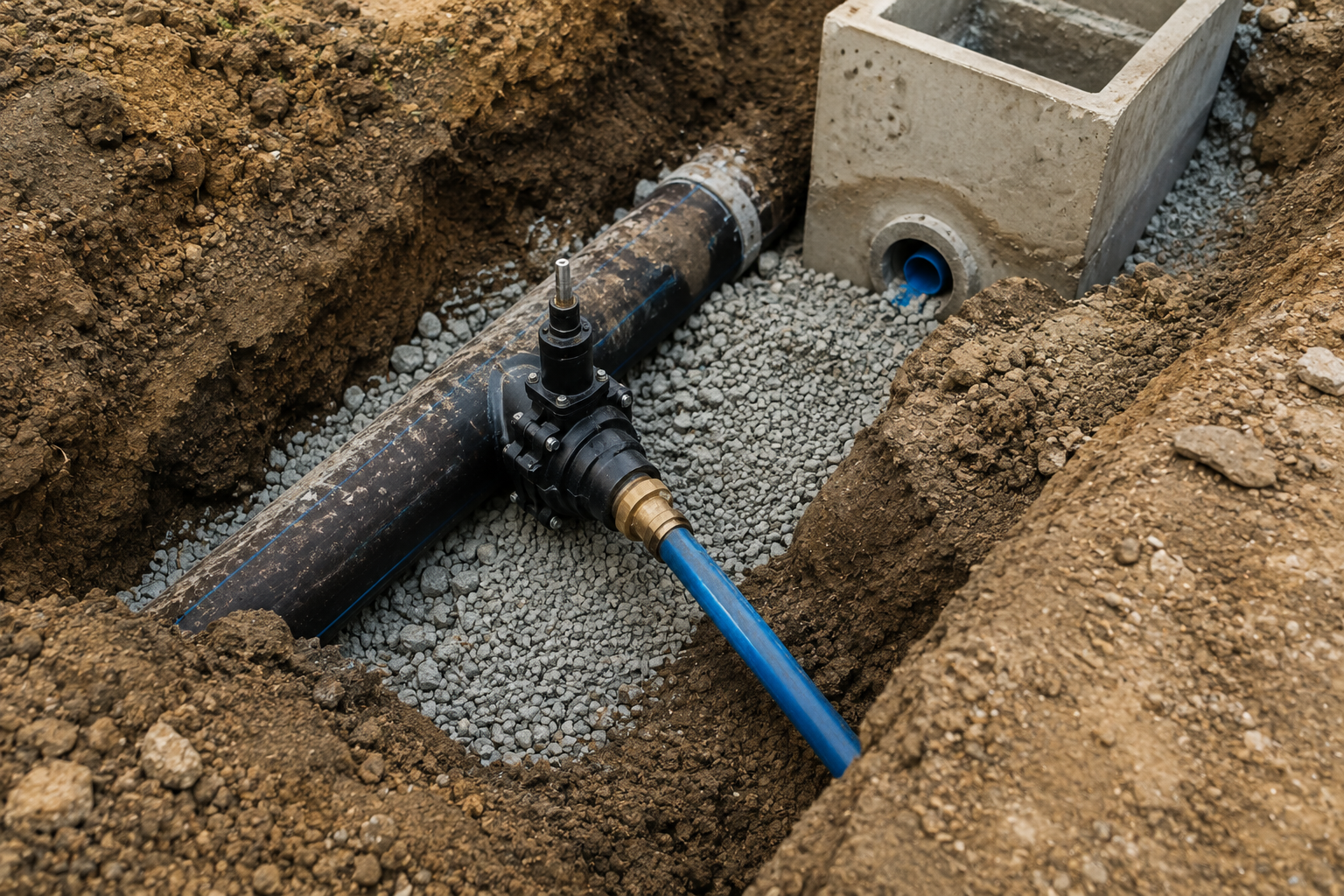
Utility Hookups and Tie-Ins
Performing the excavation and applicable connection work where a property ties into an existing main, service point, or meter, coordinated with the utility provider and inspection schedule.
CLOSING UP
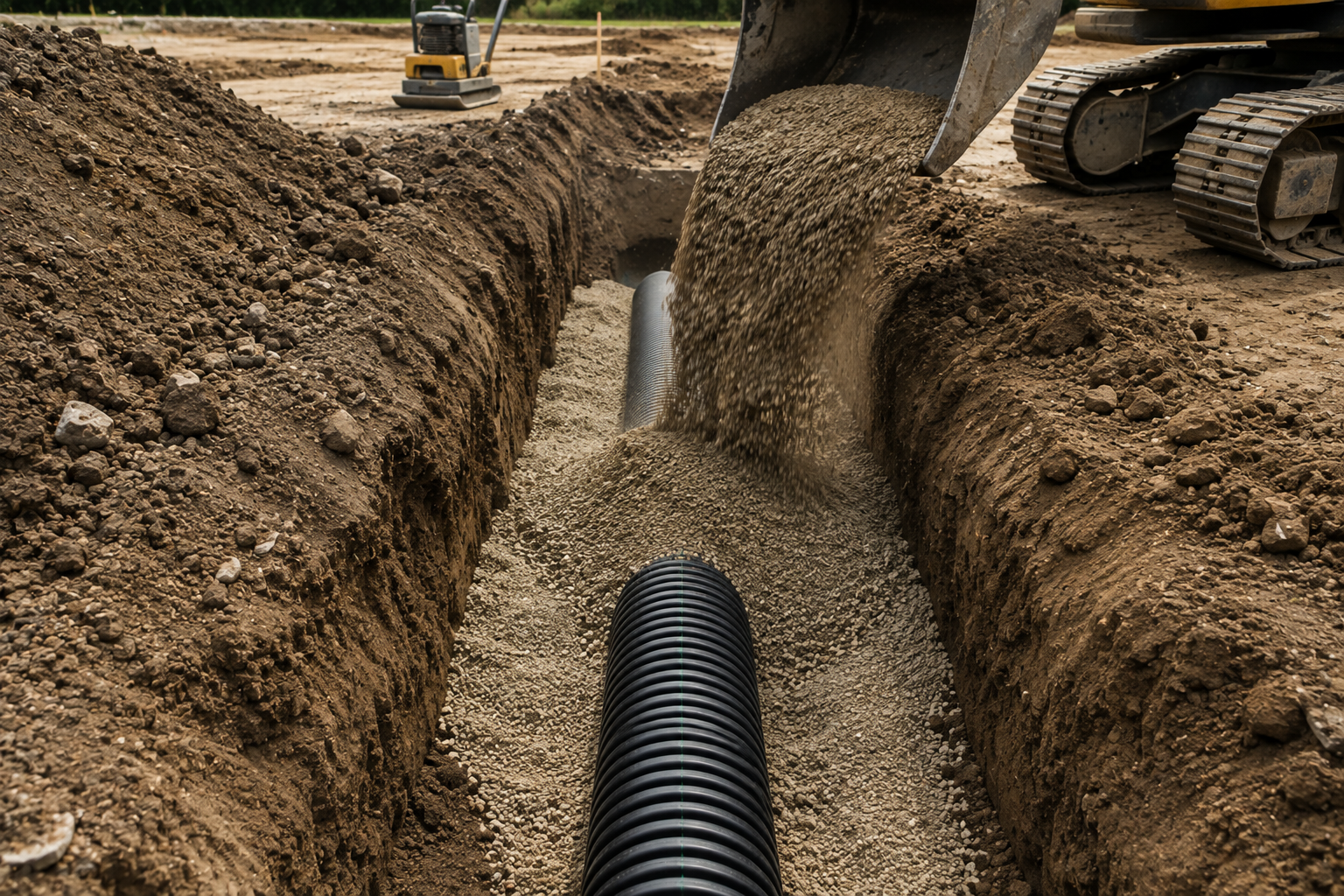
Bedding, Backfill, and Compaction
Placing bedding beneath and around the pipe, backfilling in controlled lifts free of rock and debris, compacting each layer, and restoring the surface so the trench line disappears.
➜ THE WORD ON OUR WORK
WHAT OUR CLIENTS SAY.
Trenching feedback almost never arrives right away. It arrives a year later, when a property owner mentions the lawn is still flat over the line, or a builder calls back because the last trench passed inspection without needing a second visit.
➜ Common Questions
FREQUENTLY ASKED QUESTIONS.
Trenching questions tend to be about depth, who calls the locate, and whether one contractor can handle both the digging and the connection. Here they are.
Can you dig trenches for water, sewer, and underground power?
Yes. Dozer Construction & Landscaping, LLC provides trenching and sitework for underground utilities in Moses Lake, WA, including water, sewer, and power projects. Trench depth, routing, separation, bedding, and backfilling are planned around the specific utility requirements. Locates come first.
Can you handle both the excavation and utility hookup work?
Depending on the project, we handle excavation, trenching, site preparation, and applicable utility connection work, so customers do not coordinate several dirt-work contractors. Exact scope depends on the utility provider, permitting, and the connections the property needs. Scope is confirmed up front.
How deep does a utility trench need to be?
It depends on the utility. Water lines go below the local frost depth, sewer depth is set by the fall required to reach the connection point, and electrical depth comes from the serving utility and electrical code. Each one is checked.
Why does bedding material matter under a pipe?
Pipe resting directly on rock or uneven trench bottom carries point loads it was never designed for. Sand or fine bedding spreads the load evenly and protects the pipe during backfill and for decades afterward. It costs very little to include.
What separation is required between water and sewer lines?
Health rules require specific horizontal and vertical separation so a sewer leak cannot contaminate a water service. Where site conditions make the standard separation impossible, alternative construction methods have to be approved instead. The health department sets those distances locally.
Can trenching be done without tearing up my whole yard?
Usually, yes. A planned route, a narrow trencher or mini excavator, spoil placed on tarps, and same-day backfill keep the disturbance to a strip. Dozer Construction & Landscaping, LLC works this way on established Moses Lake, WA lawns.
Who marks private utility lines like irrigation or a shop feed?
The 811 service marks public utilities only. Private lines past the meter, including irrigation, yard lighting, well feeds, and outbuilding power, are the property owner's responsibility to locate or point out. Pointing them out before we dig prevents most damage.
What happens if a utility line gets damaged during trenching?
The operator is notified immediately and repairs are arranged through the proper channels. Requesting locates, honoring the tolerance zone, and hand-digging near marks are what keep that from happening in the first place. Every ticket is documented before work starts.
➜ HOW WE WORK
FROM LOCATE TICKET TO BACKFILL, HERE IS HOW.
STEP 01
WE MAP THE ROUTE
The path from source to structure is walked and planned around obstacles, existing utilities, trees, and finished surfaces. A route chosen well removes half the restoration work before anything is dug.
STEP 02
WE CALL THE LOCATES
The dig area is white-lined and the ticket goes in with the required notice. Nothing gets cut until every operator has marked their facilities and posted a positive response to that ticket.
STEP 03
WE PROTECT WHAT IS MARKED
Inside the tolerance zone around a marked line, the work switches to hand digging or vacuum excavation. Machines stay clear until the existing facility has been physically exposed and confirmed.
STEP 04
WE CUT TO DEPTH AND GRADE
The trench is excavated to the depth, width, and fall the utility requires, with sloping or shielding where depth demands it and spoil kept well back from the trench edge.
STEP 05
WE BED AND LAY
Bedding material goes down before the pipe or conduit, the line is placed and supported evenly, separation from other utilities is verified, and warning tape is installed where the specification calls for it.
STEP 06
WE BACKFILL AND RESTORE
Backfill goes in as compacted lifts free of rock and debris, the surface is brought back to match the surroundings, and the trench line is graded so it does not settle into a channel.
➜ GET YOUR FREE ESTIMATE
DESCRIBE WHAT NEEDS CONNECTING, AND THE ESTIMATE IS FREE.
Distance from source to structure is the easy part of a utility estimate. What matters is what the trench crosses, how deep each line has to sit, and who is making the connection at the end. Describe what you are connecting and where, and we will walk the route, sort out the locate and permit steps, and hand you a written scope covering the trench and the tie-in. Contact page or quote form.
WHAT YOUR TRENCHING QUOTE COVERS:
- Route length and what it crosses
- Depth and separation for each utility
- Locate ticket and permit handling
- Bedding and backfill material
- Compaction and surface restoration
- Coordination with your connecting trade