
➜ Drainage
DRAINAGE IN Moses Lake, WA
Roughly 6 inches of annual rainfall makes this a dry region on paper, and it still produces standing water against foundations every spring, because the problem here is never volume, it is where the water has to go. Dozer Construction & Landscaping, LLC solves drainage in Moses Lake, WA: French drains, curtain drains, catch basins, dry wells, culverts, downspout tie-ins, sump discharge lines, and regrading. Licensed and insured, 11 years of moving water away from the things it damages.
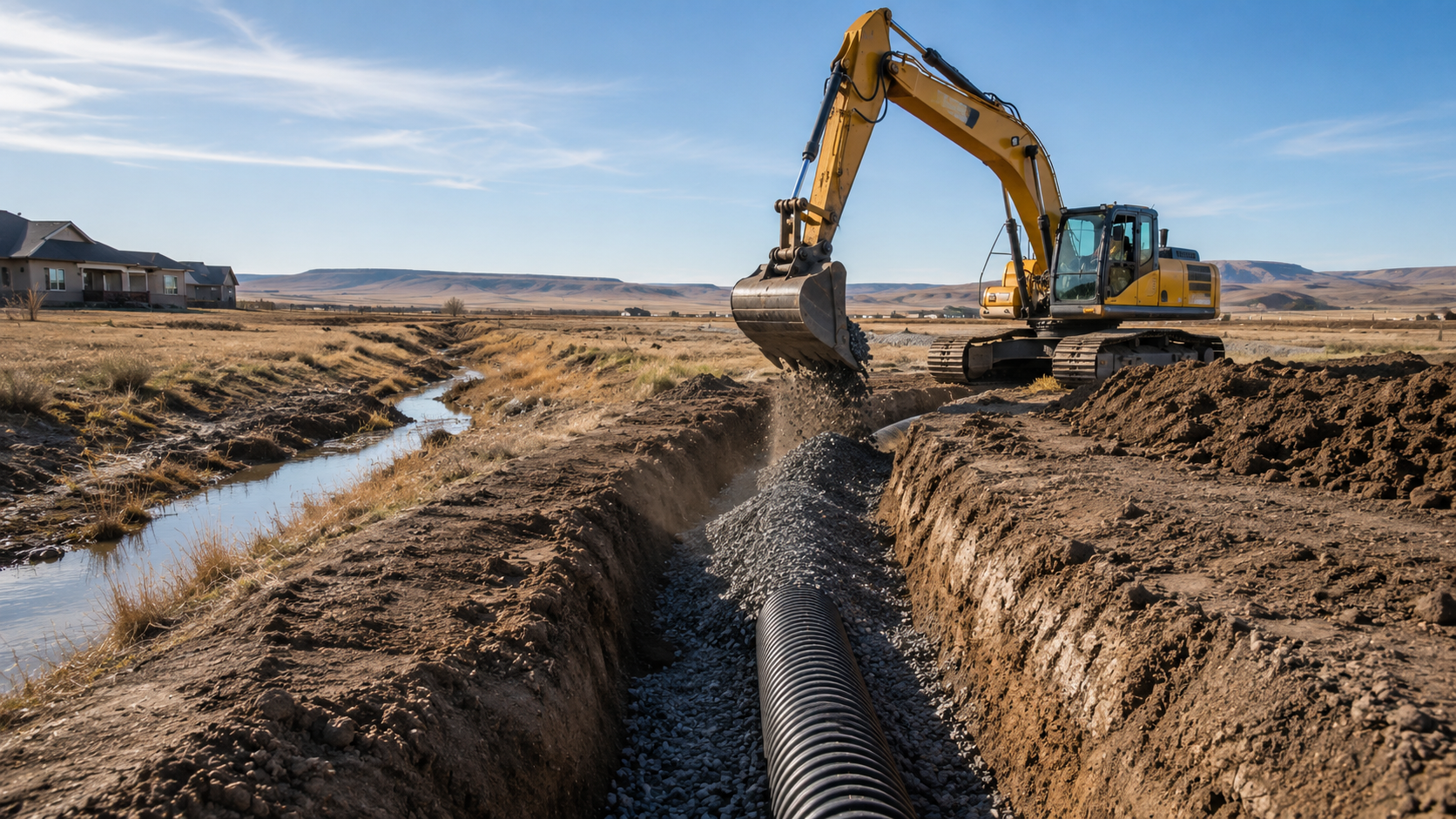
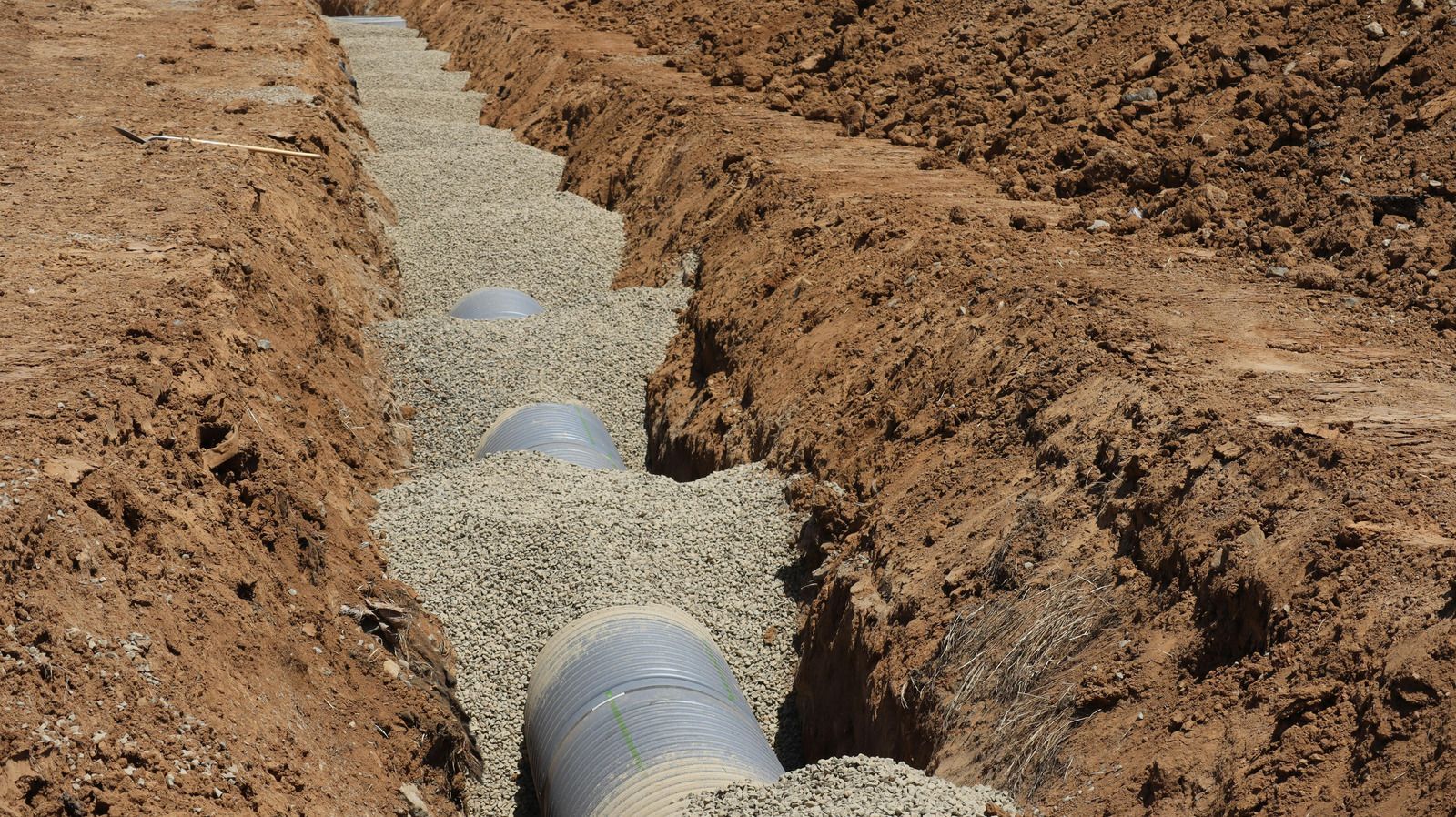
STANDING WATER IS ALWAYS ARRIVING FROM SOMEWHERE.
A wet corner of a yard is rarely just a wet corner. It is water arriving from somewhere, finding no route out, and sitting on ground that cannot absorb it fast enough. Solving that means answering three questions in order: where is the water coming from, why does it stop here, and where can it legally and practically go instead.
Skip any of those and you get a drain that works for a single season. Answer all three and the corner stays dry through snowmelt, irrigation, and the occasional serious storm.
- Source, cause, and outfall identified first
- Surface and subsurface solutions combined
- Foundation drainage kept separate from yard
- Discharge routed to a legal outlet
➜ DRAINAGE
SNOWMELT AND IRRIGATION FIND YOUR BASEMENT ANYWAY.
The Basin gets around 14 inches of snow across a winter and a long irrigation season on top of that, both delivered onto soil with very little organic content and, in many areas, a cemented layer not far down. Water that cannot soak in has to run somewhere, and if the grade points at a foundation, that is where it goes. Drainage here is about interception and routing rather than absorption.
HARDPAN, IRRIGATION, AND NOWHERE FOR IT TO GO.
Three conditions cause most of the drainage calls around Grant County. A restrictive layer that stops water from percolating, so it perches near the surface. Neighboring irrigation adding water on a schedule nobody controls. And rural properties with no storm system to discharge to, which forces the solution to be an on-site dry well, infiltration area, or a routed outfall along a ditch line.
WATER HAS TAUGHT US MORE THAN ANY MANUAL.
Every drainage failure we have been called to fix taught us something a specification would not: how a dry well behaves once the surrounding soil loads up, how quickly a fabric-wrapped drain silts in without the right rock, how far a neighbor's irrigation actually travels underground. 11 years of that has made us permanently skeptical of quick fixes and one-size details. Where does the water sit on your property?
WHAT WORKING DRAINAGE PROTECTS
A Foundation That Stays Dry
Water intercepted before it reaches a footing protects the structure, the slab, the crawlspace, and everything stored in it from the slow damage that saturation causes over years.
A Yard You Can Actually Use
Ground that drains within hours instead of days means lawn, garden, and play areas stay usable through spring rather than being written off until the middle of summer.
Driveways And Walkways That Last
Water is what destroys gravel and concrete surfaces, by washing out base material and by freezing under them. Routing it away extends the life of everything you drive or walk on.
Landscaping That Survives
Most plants die from standing water rather than drought, and a drainage correction frequently rescues an area where several rounds of planting have already failed.
Neighbor Problems That Stop
Runoff that leaves your property in a controlled way, to a legal outlet, ends the disputes that arise when water simply crosses a line wherever gravity happens to take it.
Property Value You Do Not Lose
Visible standing water, water stains in a basement, and a soggy yard all reduce what a buyer will offer, and all of them are cheaper to fix before a listing than during one.
➜ WHAT WE DRAIN
OUR DRAINAGE WORK
Drainage solutions are chosen by what the water is doing, not by preference. These six cover the systems most often installed on Basin properties, alone or in combination.
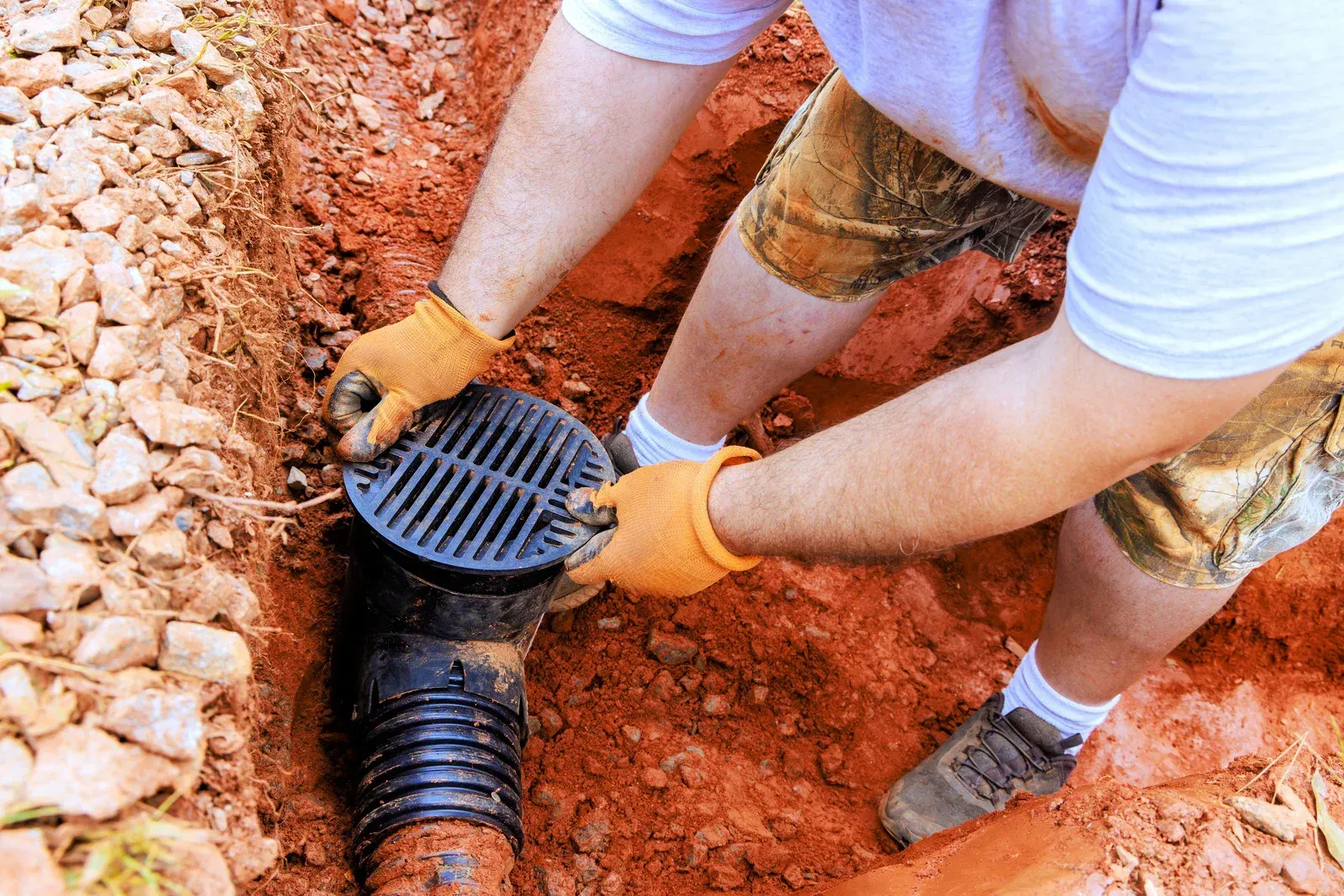
SUBSURFACE
French Drain Installation
Installing perforated pipe in a gravel-filled trench wrapped in filter fabric, sized and sloped to collect water moving through the soil and carry it to a discharge point away from structures.
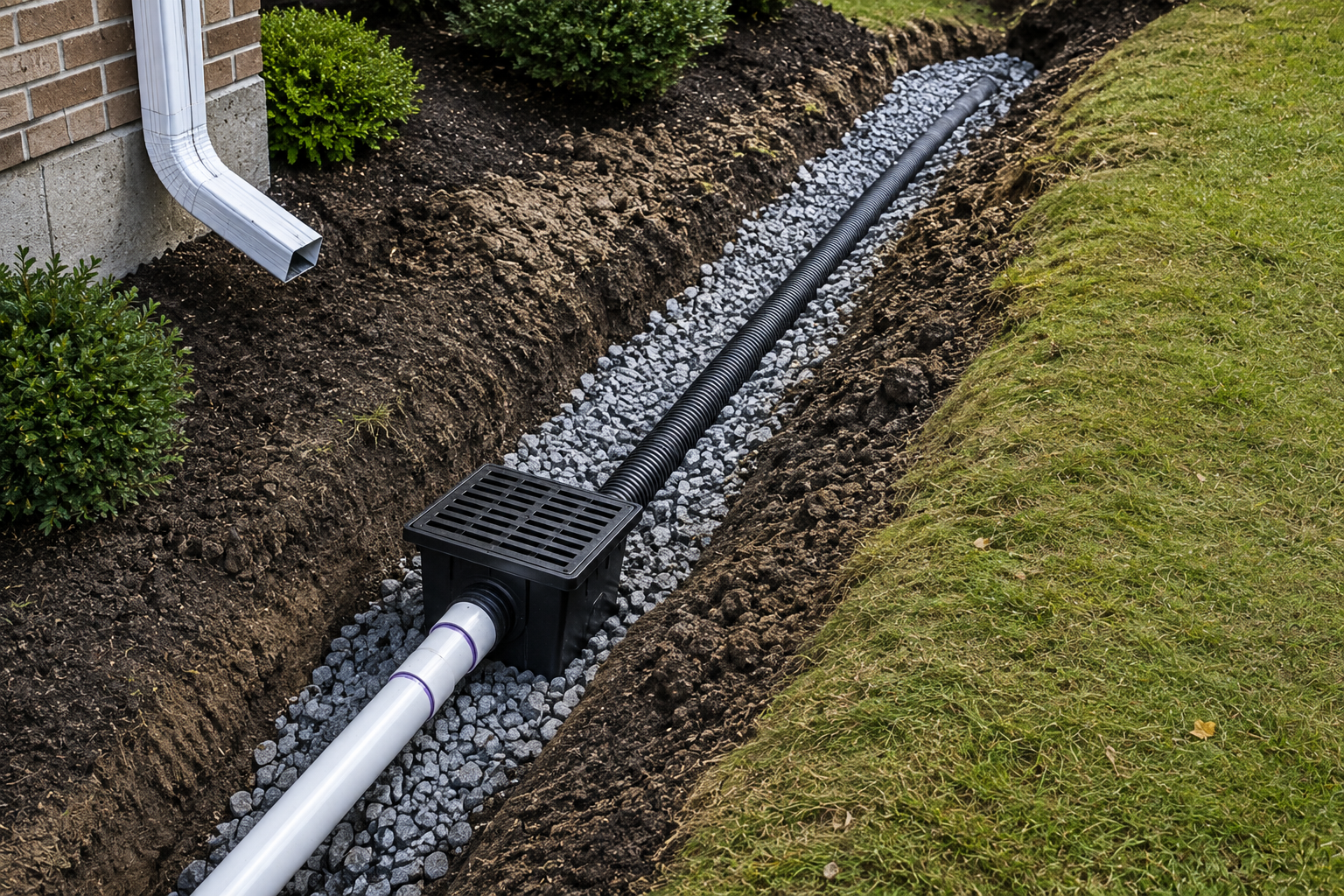
INTERCEPTION
Curtain and Interceptor Drains
Cutting a drain across the uphill side of a structure or yard area to catch water before it arrives, which is usually more effective than collecting it after it has already pooled.
SURFACE WATER
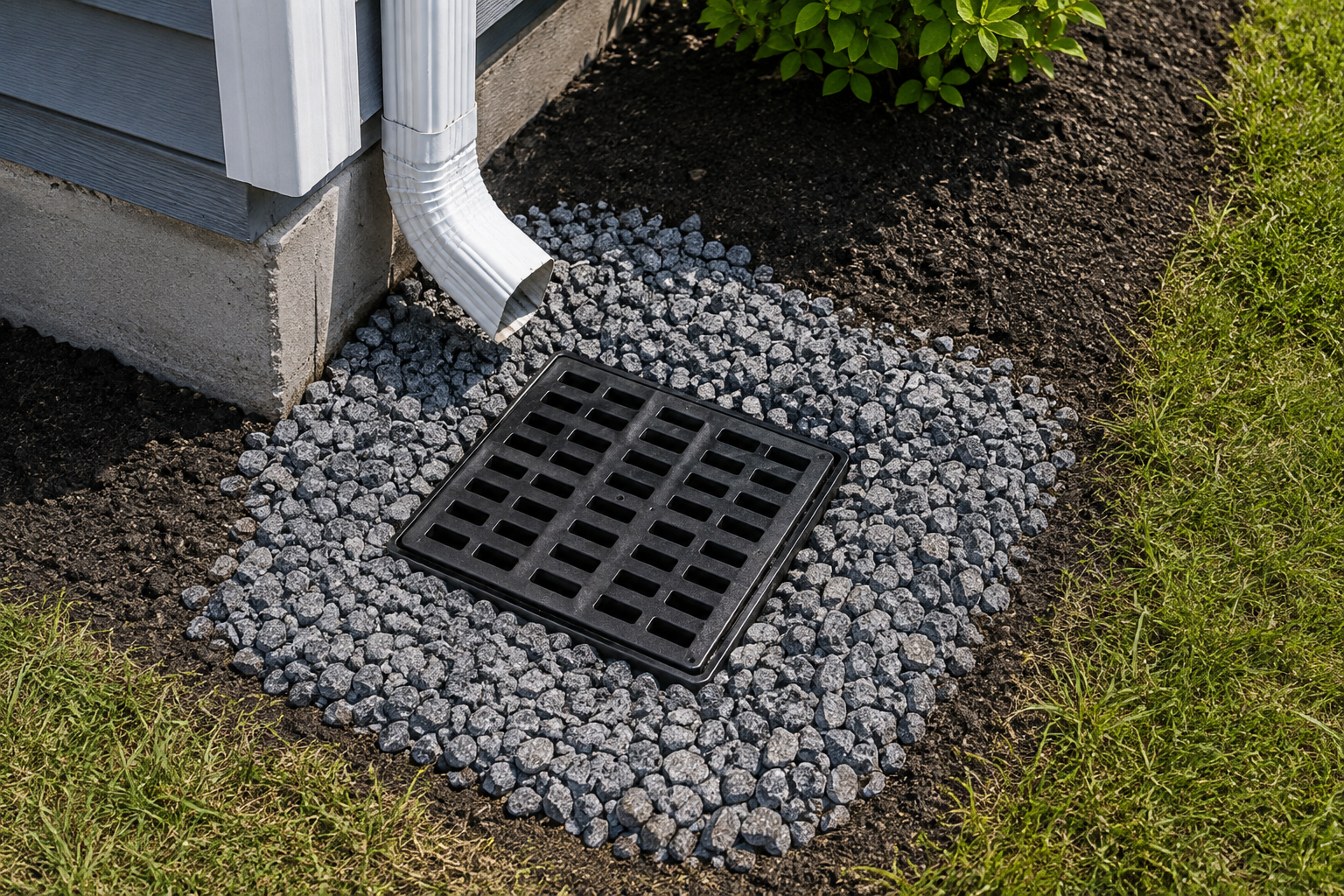
Catch Basins and Area Drains
Setting basins at low points and connecting them to a piped system, so surface runoff, downspout discharge, and irrigation overflow are collected and routed rather than left to find their own way.
INFILTRATION
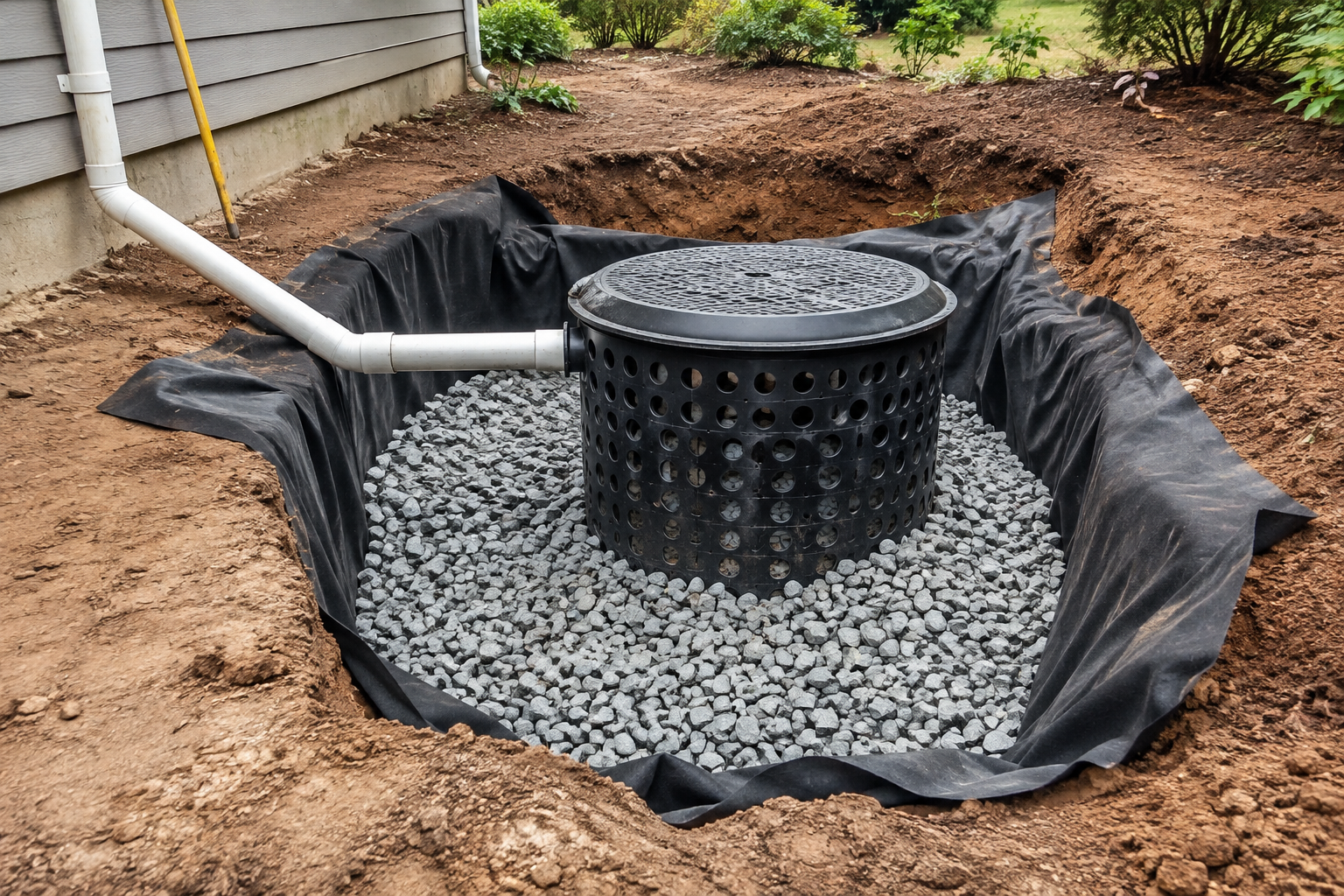
Dry Wells and Infiltration Systems
Excavating and constructing dry wells and infiltration galleries where there is no storm system to discharge into, sized to hold and release the volume that reaches them.
CROSSINGS
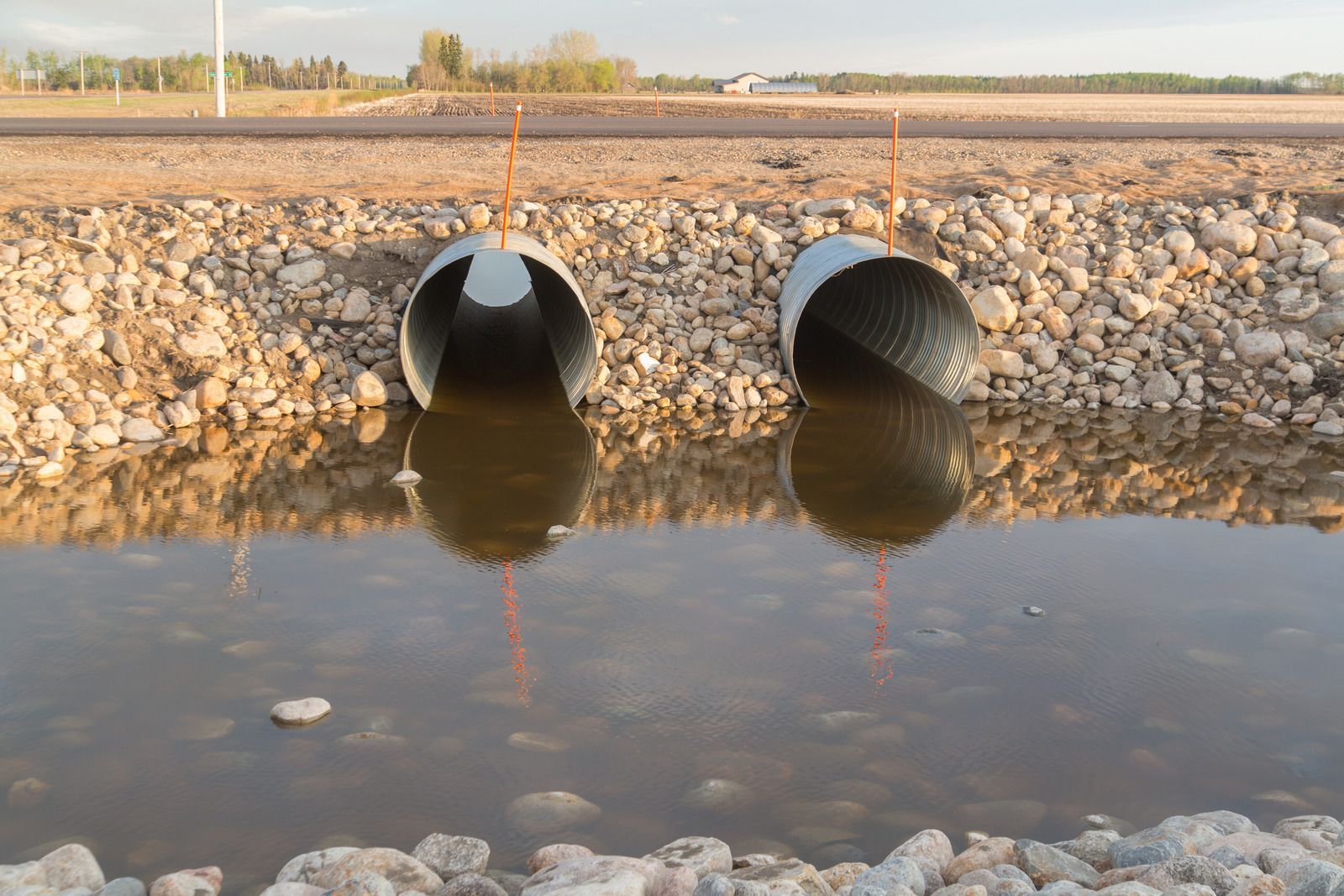
Culvert Installation and Ditch Work
Installing and replacing culverts at driveways and approaches, and cutting or reshaping ditch lines so water crosses a property in a defined channel instead of spreading across it.
AT THE HOUSE
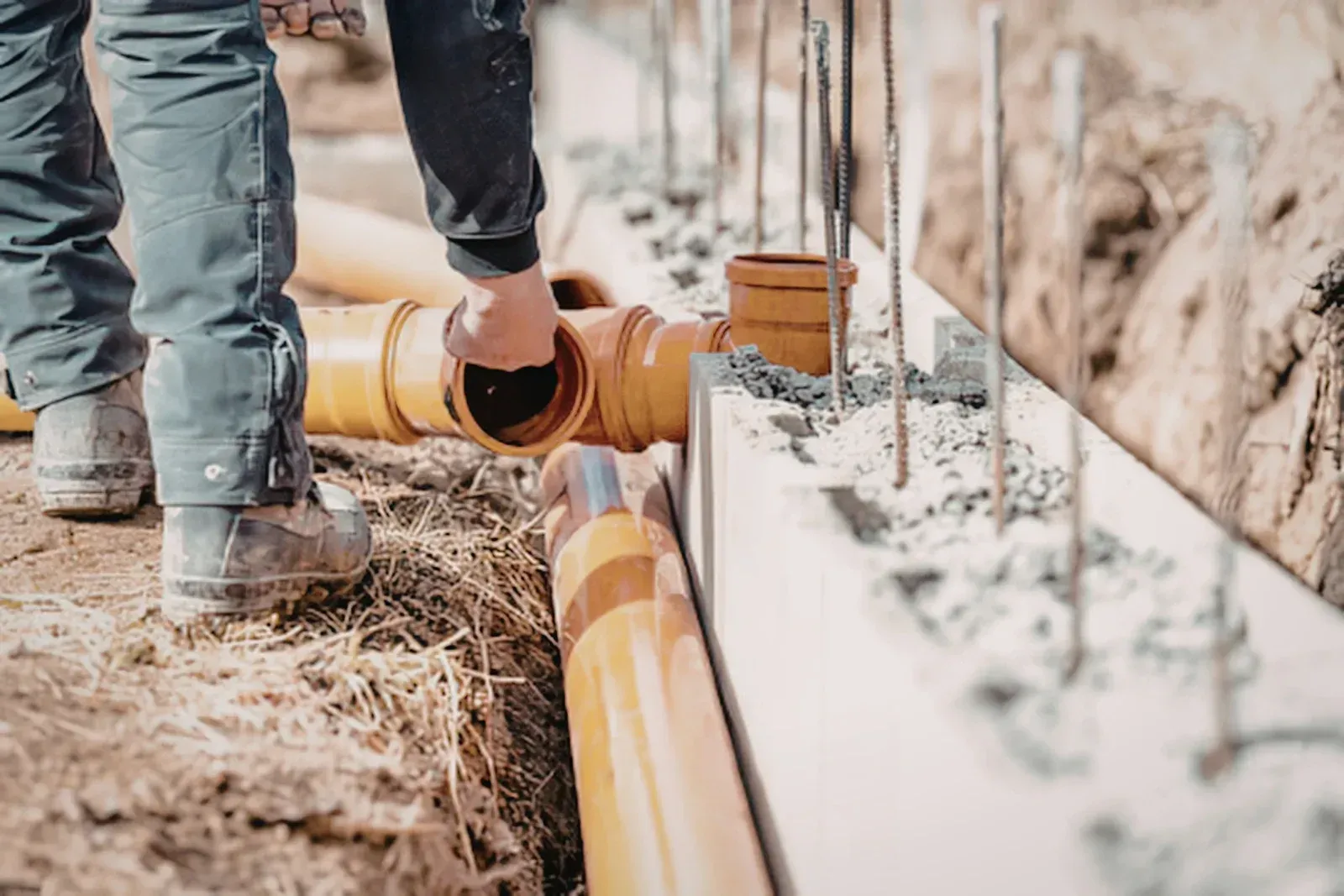
Foundation Drainage and Downspout Lines
Installing footing drains, connecting downspouts and sump discharge to buried lines, and grading the first several feet around a structure so water leaves rather than collecting against the wall.
➜ THE WORD ON OUR WORK
WHAT OUR CLIENTS SAY.
Drainage is the one service where the verdict comes from weather rather than from us. The message we like best arrives the following March, after the melt, and usually says some version of the same short thing: the corner stayed dry.
➜ Common Questions
FREQUENTLY ASKED QUESTIONS.
Drainage questions come down to why water is collecting, which system suits the situation, and where the water is allowed to end up. Here they are.
How do you prevent drainage problems when grading a property?
Good grading is about more than making the ground look level. Finished elevations should encourage water to move away from structures toward an appropriate drainage location, while accounting for driveways, neighboring properties, landscaping, and other site conditions. The outfall is identified first.
What is the difference between a French drain and a curtain drain?
Both use perforated pipe in gravel. A French drain collects water within an area that already gets wet, while a curtain drain is positioned upslope to intercept water before it reaches that area. Many properties end up needing both.
Where is drainage water allowed to discharge?
To a legal outlet, which may be a storm system, a ditch with the right to receive it, a dry well, or an infiltration area on the property. Discharging onto a neighbor creates liability. Confirming the outlet comes before design.
Why did my French drain stop working?
Usually silt. A drain built without proper filter fabric, with the wrong rock gradation, or with fines washing in from the sides gradually clogs, and once the voids fill the system stops moving water. Rebuilding with the right materials fixes it.
Can drainage be fixed without digging up the whole yard?
Frequently yes. Most solutions are a trench line, a basin, and a discharge route rather than a full excavation. Dozer Construction & Landscaping, LLC traces the source first on Moses Lake, WA properties, which keeps the work narrow.
Should downspouts be connected to underground drains?
Generally yes. Roof water dumped at the foundation is the largest single source of water against a wall, and piping it 10 feet or more away removes a surprising share of basement moisture problems. Discharge still needs a proper outlet.
How deep does a drain line need to be?
Deep enough to intercept the water and to maintain fall to the outlet, which usually means 18 to 36 inches. The controlling factor is continuous slope to the discharge point rather than depth alone. Instruments verify it across the run.
Do I need a permit for a drainage system?
Small yard drains generally do not require one, but work in a ditch, right-of-way, culvert, or critical area often does. Dozer Construction & Landscaping, LLC identifies which applies before starting in Moses Lake, WA. Confirming takes one phone call.
➜ HOW WE WORK
FROM WET SPOT TO OUTFALL, HERE IS HOW.
STEP 01
WE FIND THE SOURCE
The property gets walked to trace where water arrives from: roof, grade, neighboring ground, irrigation, or groundwater. Fixing the symptom without knowing the source is how drainage gets installed twice.
STEP 02
WE FIND THE OUTLET
Every system needs somewhere legal to discharge. A ditch, a storm connection, a dry well, or an infiltration area is identified and confirmed before the type of system is decided.
STEP 03
WE PICK THE SYSTEM
Surface, subsurface, or both, sized to the area draining into it. The choice follows the water's behavior, the soil's absorption, and the outlet available rather than a standard detail.
STEP 04
WE CUT TO SLOPE
Trenches are excavated with continuous fall to the outlet, verified with instruments rather than by eye, since a drain line that flattens or reverses anywhere along its run will not work.
STEP 05
WE BUILD IT TO LAST
Filter fabric, the correct rock gradation, perforated pipe oriented properly, basins set to grade, and connections made tight, all of which are what determine whether the system silts up early.
STEP 06
WE TEST AND RESTORE
Water is run through the system to confirm it flows and discharges as intended, then the surface is restored, regraded to support the drain, and left so runoff moves toward it.
➜ GET YOUR FREE ESTIMATE
POINT US AT THE WET SPOT, AND THE ESTIMATE IS FREE.
Drainage is the service most often solved twice, because the second contractor is usually the first one to ask where the water is coming from. Tell us where it collects, when it appears, and what the property looks like around it. We will walk the site, trace the source, identify a legal outlet, and write a scope for the system that actually addresses the cause. Reach us on the contact page or the quote form.
WHAT YOUR DRAINAGE QUOTE COVERS:
- Source of the water identified
- Legal discharge point confirmed
- System type sized to the area
- Trench depth, slope, and materials
- Foundation and downspout connections
- Surface restoration and regrading