
➜ Power & Electrical Trenching
POWER & ELECTRICAL TRENCHING IN Moses Lake, WA
Direct-buried residential branch circuits generally require 24 inches of cover, while conduit-protected runs and utility service laterals carry their own depths set by the serving provider. Dozer Construction & Landscaping, LLC trenches for power in Moses Lake, WA: service laterals, shop and barn feeds, well pump circuits, pivot and irrigation power, yard lighting, conduit installation, sand bedding, warning tape, and compacted backfill. Licensed and insured, with 11 years of trenches that electricians have been glad to find waiting.
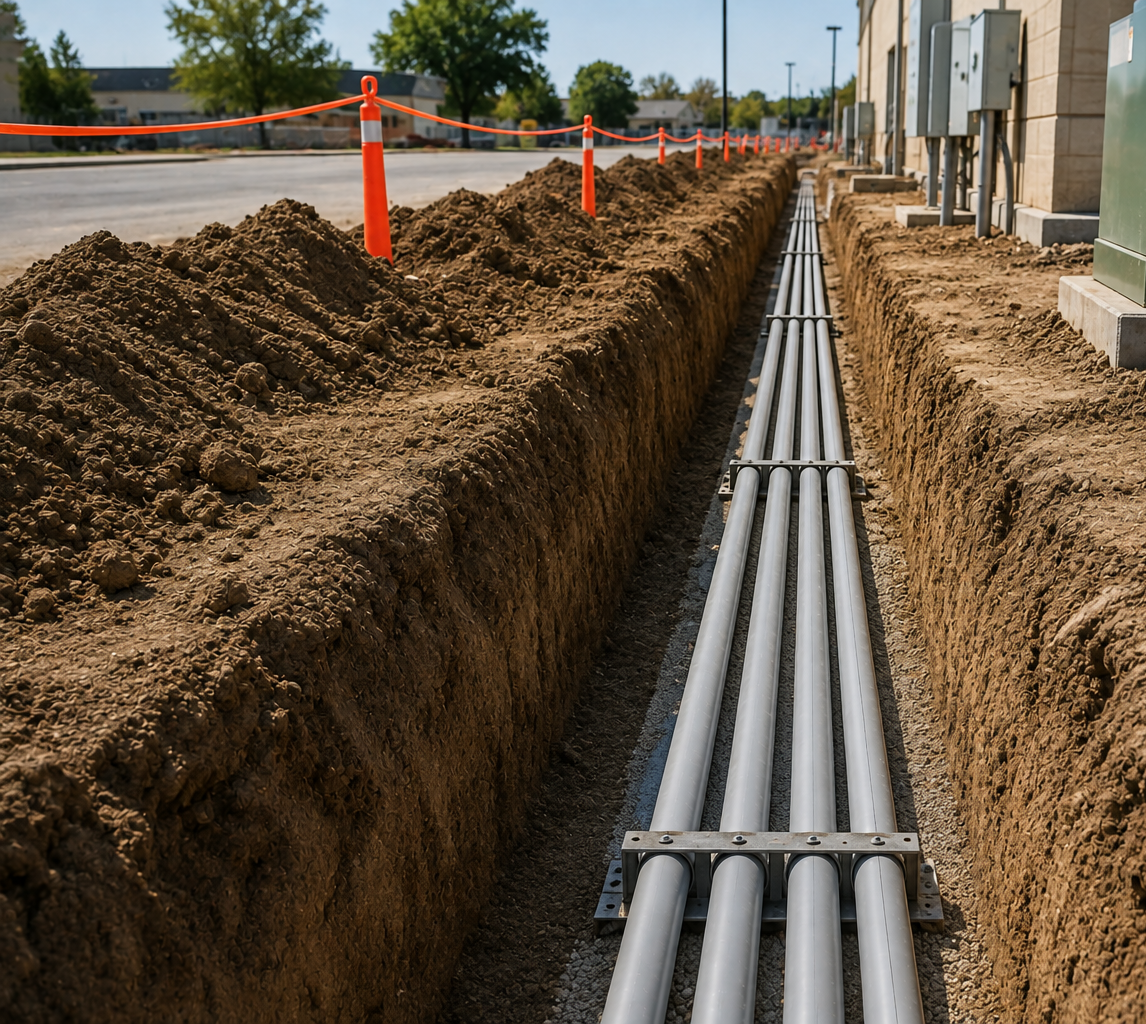
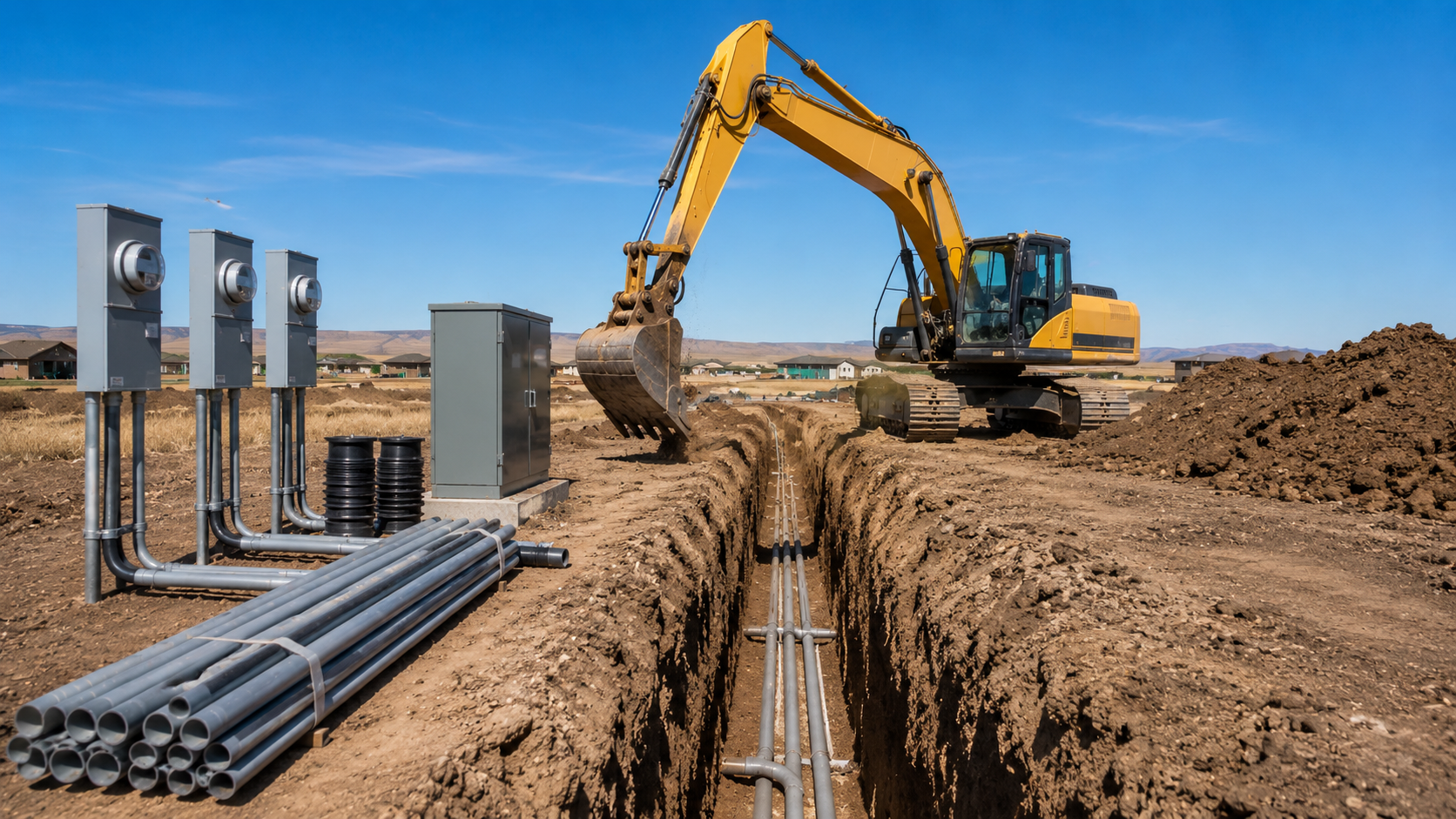
CONDUIT IS CHEAP, REOPENING A TRENCH IS NOT.
The cost of a power trench is almost entirely in opening and closing the ground. The conduit itself is a rounding error by comparison. That is why we ask what else might need to run that direction before backfilling: a future shop, a gate operator, landscape lighting, a security camera, an EV charger, a second well.
Adding a spare conduit and a pull string while the trench is open costs very little. Discovering the need 2 years later costs the entire excavation a second time, through a lawn that has since been established.
- Depth set by the utility and code
- Sand bedding beneath and over conduit
- Warning tape above the run
- Spare conduit installed while open
➜ POWER & ELECTRICAL TRENCHING
YOUR ELECTRICIAN PULLS WIRE, WE MAKE THAT POSSIBLE.
Electrical work has a clean division of labor. A licensed electrician sizes the conductors, makes the terminations, and answers to the electrical inspector. Our part is the ground: the route, the depth, the conduit run with sweeps rather than tight bends, the bedding, the warning tape, and backfill that does not crush or shift what was installed. Done right, the pull goes quickly and nobody has to renegotiate anything.
SERVICE LATERALS, SHOP FEEDS, AND PIVOT RUNS.
Around Grant County the power trench list is distinctive. Long runs to shops and outbuildings set well back from the house. Well pump circuits. Pivot and irrigation panel feeds crossing farmed ground where tillage depth matters. Yard and security lighting on rural properties with no streetlights. Each of those has a different depth logic, and each one gets planned around what will be driven, tilled, or built above it.
LIVE LINES TEACH RESPECT QUICKLY.
Anyone who has worked around energized underground service develops a very short list of shortcuts they are willing to take, and 11 years in that list is empty. Locates get called, the tolerance zone gets hand-dug, marked facilities get physically exposed before a machine goes near them, and nothing is assumed from a map or from what somebody remembers about the original installation. What are you running power to?
WHAT A CLEAN POWER TRENCH DELIVERS
A Pull That Goes Smoothly
Conduit with proper sweeps, no crushed sections, and pull strings already in place means the electrician gets conductors through on the first attempt instead of billing hours fighting the run.
Protection From Future Digging
Correct depth and warning tape above the conduit gives anyone excavating later a clear signal before they reach the line, which is the difference between a warning and an outage.
Capacity You Have Not Needed Yet
Spare conduit installed during the original trench turns a future shop, charger, or outbuilding into a wire pull instead of a second excavation across finished landscaping.
Ground That Stays Level
Compacted backfill above the conduit keeps the trench line flush with the surrounding yard or field rather than settling into a depression that collects water and catches equipment.
Separation That Satisfies Code
Correct clearance from water, sewer, and gas lines keeps the installation compliant and keeps electrical away from wet utilities, which is a safety requirement rather than a formality.
A Trade Handoff Without Friction
When the trench matches what the electrician specified, in depth, route, and condition, the schedule holds and neither trade spends the morning waiting on the other.
➜ WHAT WE RUN
OUR POWER TRENCHING WORK
Power trenching ranges from a short lighting circuit to a long service run across acreage. These six describe the work most often requested on properties around the Basin.
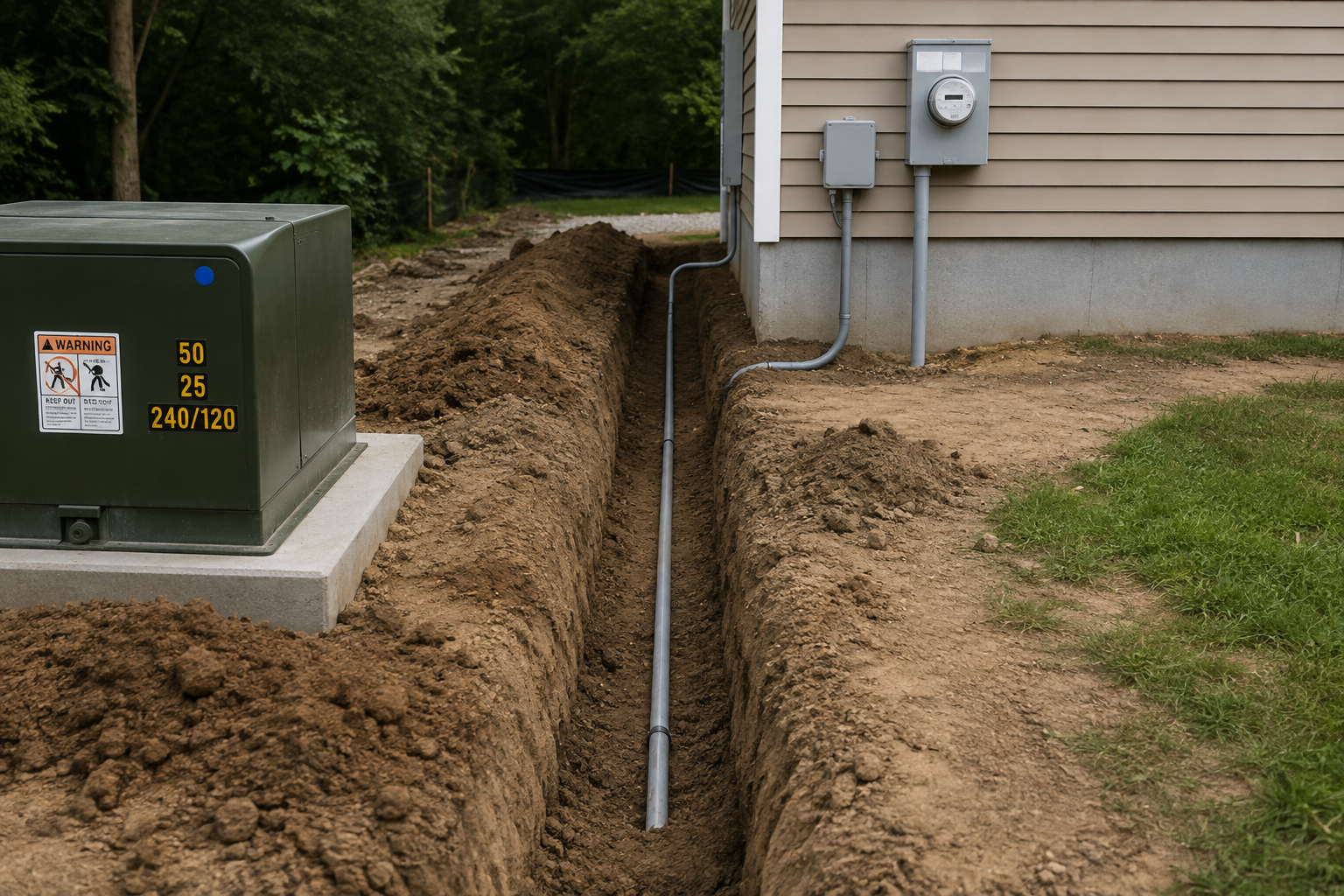
SERVICE ENTRY
Utility Service Lateral Trenching
Excavating from the transformer or pedestal to the meter base at the depth and route the serving utility specifies, coordinated with their inspection so the connection is not delayed.
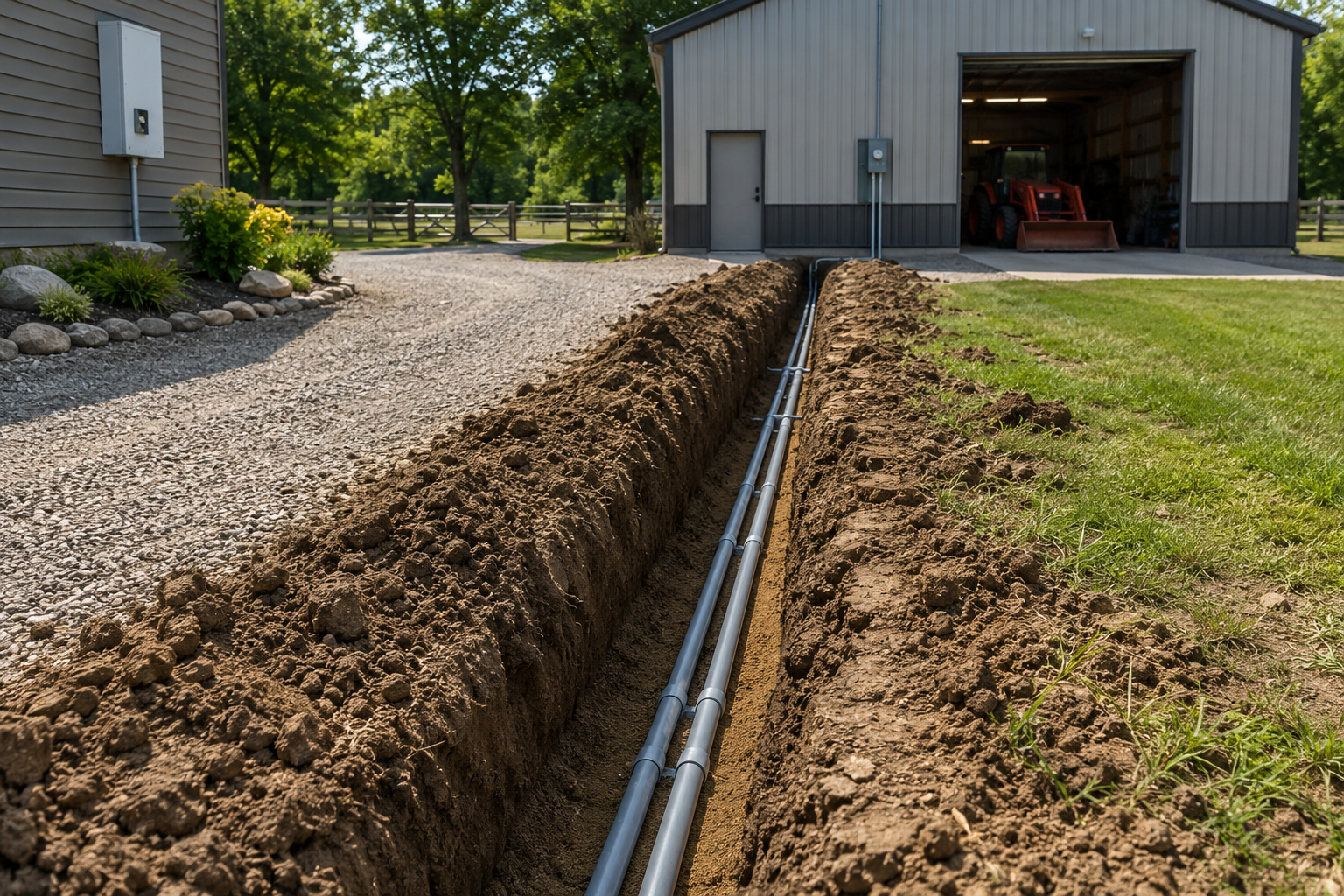
OUTBUILDINGS
Shop, Barn, and Garage Feeds
Trenching long conduit runs from a main panel to detached structures, sized and routed so voltage drop, future capacity, and vehicle traffic above the line have all been accounted for.
WATER SUPPLY
Well and Pump Circuit Trenching
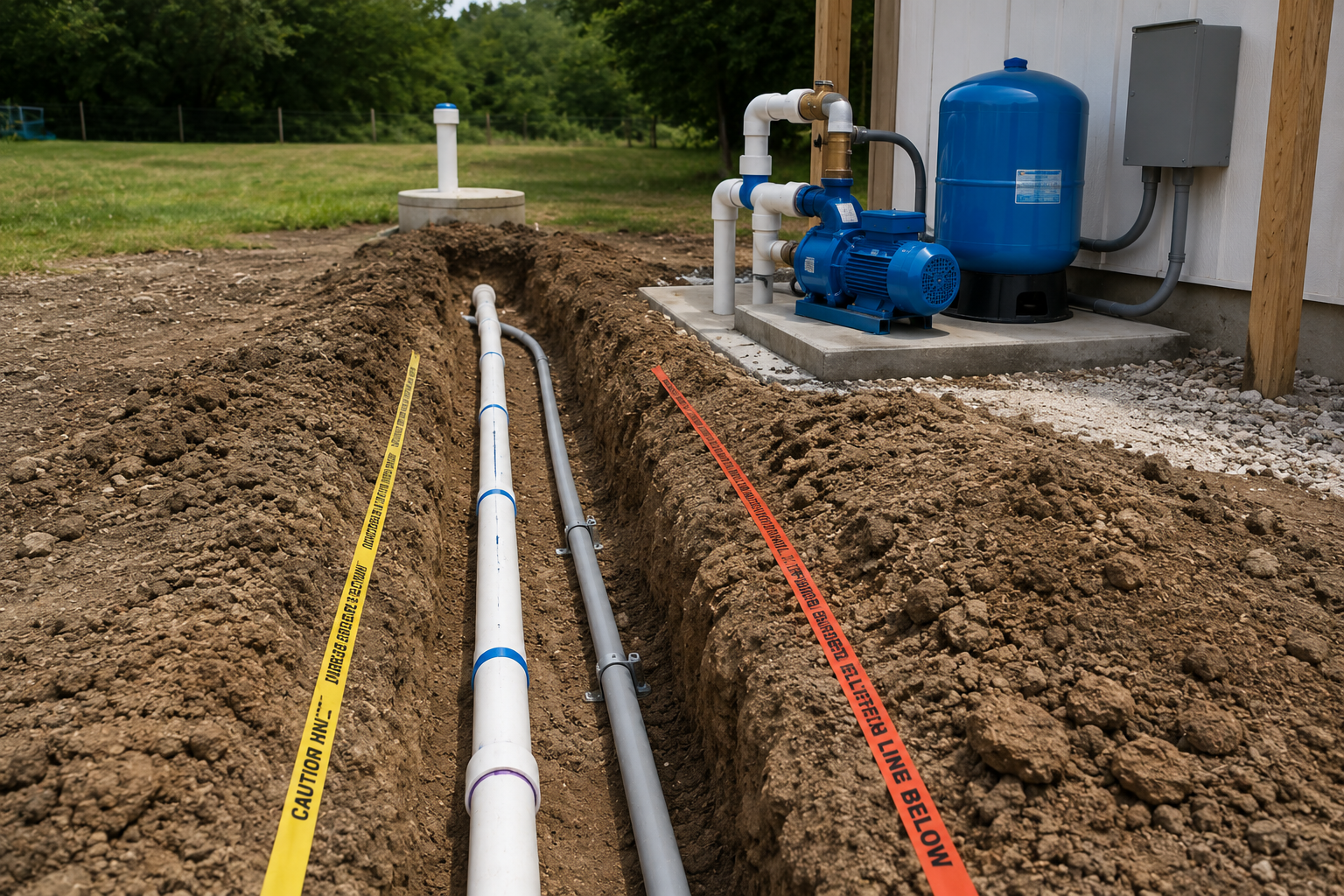
Running power to well heads, booster pumps, and pressure tanks, frequently in a shared trench with the water line where required separation between the two can be properly maintained.

AGRICULTURAL
Pivot and Irrigation Power
Installing conduit runs to pivot points, irrigation panels, and field equipment at depths that keep the line safely below tillage, with routes planned around the equipment patterns above them.

OUTDOOR
Landscape and Security Lighting Circuits
Trenching for yard lighting, gate operators, cameras, and outbuilding switches, kept shallow where code allows but marked and protected so future landscaping work does not cut through them.

CONDUIT WORK
Conduit, Sleeving, and Road Crossings
Installing conduit, sleeves under driveways and roadways, and pull strings for future use, so a crossing never has to be reopened once the surface above it has been finished.
➜ THE WORD ON OUR WORK
WHAT OUR CLIENTS SAY.
Electricians are our most demanding customers on this work and the best source of referrals for it. A trench that is the right depth, the right route, and open when the electrician arrives is apparently a good deal rarer than it should be.
➜ Common Questions
FREQUENTLY ASKED QUESTIONS.
Power trenching questions cover depth, who is responsible for which part of the work, and whether it is worth adding spare capacity now. These are the common ones.
How deep does an electrical trench need to be?
It depends on the method and voltage. Direct-buried residential branch circuits commonly require 24 inches of cover, conduit-protected runs can be shallower, and utility service laterals follow the serving provider's own specification. The electrician confirms which rule applies here.
Do you install the electrical wire as well as the trench?
We handle the excavation, conduit, bedding, marking tape, and backfill. A licensed electrician pulls and terminates the conductors and answers to the electrical inspector, and the two scopes are coordinated on site. Both trades work from one layout.
Why is sand used around electrical conduit?
Sand cushions the conduit from rock and sharp material during backfill and gives an even bed underneath. Without it, a single stone can crush a section or wear through it over years of ground movement. It costs almost nothing to add.
Should I add extra conduit while the trench is open?
Almost always. The trench is the expensive part, so a spare conduit and pull string cost very little now. Dozer Construction & Landscaping, LLC installs them on most Moses Lake, WA runs rather than reopening the ground later.
Can power and water share the same trench?
Sometimes, with required vertical and horizontal separation maintained between them. Where the separation cannot be achieved, separate trenches are necessary, and the plan gets confirmed before excavation rather than during it. The utility and the electrician both weigh in.
What is warning tape and where does it go?
It is a brightly colored plastic ribbon buried above the conduit, typically 12 inches or so below finished grade. Anyone digging later reaches the tape before the line, which prevents most strike incidents. Specifications state the exact depth required.
How do you get power under an existing driveway?
Usually by boring or by installing a sleeve where the surface can be opened and restored. Dozer Construction & Landscaping, LLC handles both approaches on Moses Lake, WA properties depending on the surface and the crossing length. Surface repair is included.
Can a power trench be dug across an established lawn?
Yes. A narrow trencher, spoil placed on tarps, sod cut and set aside where practical, and same-day backfill keep the disturbance to a strip that recovers within a single growing season. Sod is reset the same day where possible.
➜ HOW WE WORK
FROM UTILITY SPEC TO BACKFILL, HERE IS HOW.
STEP 01
WE GET THE SPECIFICATION
The serving utility's depth and route requirements, the electrician's conduit size and layout, and the inspection sequence are collected first. Everything downstream follows from those three, not from assumption.
STEP 02
WE PLAN THE ROUTE
The path is chosen around existing utilities, trees, driveways, and future construction, with crossings identified and any spare capacity you want added while the ground is open confirmed.
STEP 03
WE CLEAR THE LOCATES
The ticket goes in, the area is white-lined, and marked facilities are exposed by hand before machines work near them. Energized underground service is treated as live until it is physically confirmed otherwise.
STEP 04
WE TRENCH AND SLEEVE
The trench is cut to the specified depth, sleeves are installed under driveways and roadways, and the excavation is kept open and safe for the electrical crew to work in when they arrive.
STEP 05
WE BED AND MARK
Sand bedding goes down, conduit is laid with proper sweeps, pull strings are installed, more sand covers the run, and warning tape is placed at the depth the specification requires.
STEP 06
WE CLOSE AND RESTORE
Backfill is compacted in lifts without loading the conduit, the surface is rebuilt to match what was there, sod is reset where it was saved, and the route is graded to shed water.
➜ GET YOUR FREE ESTIMATE
PASS US THE SERVICE DETAILS, AND THE ESTIMATE IS FREE.
A power trench is cheap to plan and expensive to redo, which makes the conversation before the dig the valuable part. Tell us where the power is coming from, what it is feeding, and what else might need to run that direction someday. We will check the utility requirements, coordinate with your electrician, and put together a written scope covering the route, the conduit, and the restoration. Contact page or quote form, whichever is easier.
WHAT YOUR POWER TRENCH QUOTE COVERS:
- Route length, depth, and crossings
- Conduit size, sweeps, and pull strings
- Sand bedding and warning tape
- Spare capacity added while open
- Coordination with your electrician
- Backfill, compaction, and surface repair