
➜ Gravel Driveways
GRAVEL DRIVEWAYS IN Moses Lake, WA
A gravel driveway is a road in miniature, and roads fail from the bottom up, which is why adding another load of rock to a rutted surface almost never fixes it for long. Dozer Construction & Landscaping, LLC builds and repairs gravel driveways in Moses Lake, WA: new construction, rebuilds, regrading, base repair, crowning, culverts, approaches, and parking areas. Licensed and insured, with 11 years of driveways across Grant County that have not needed us back every spring.
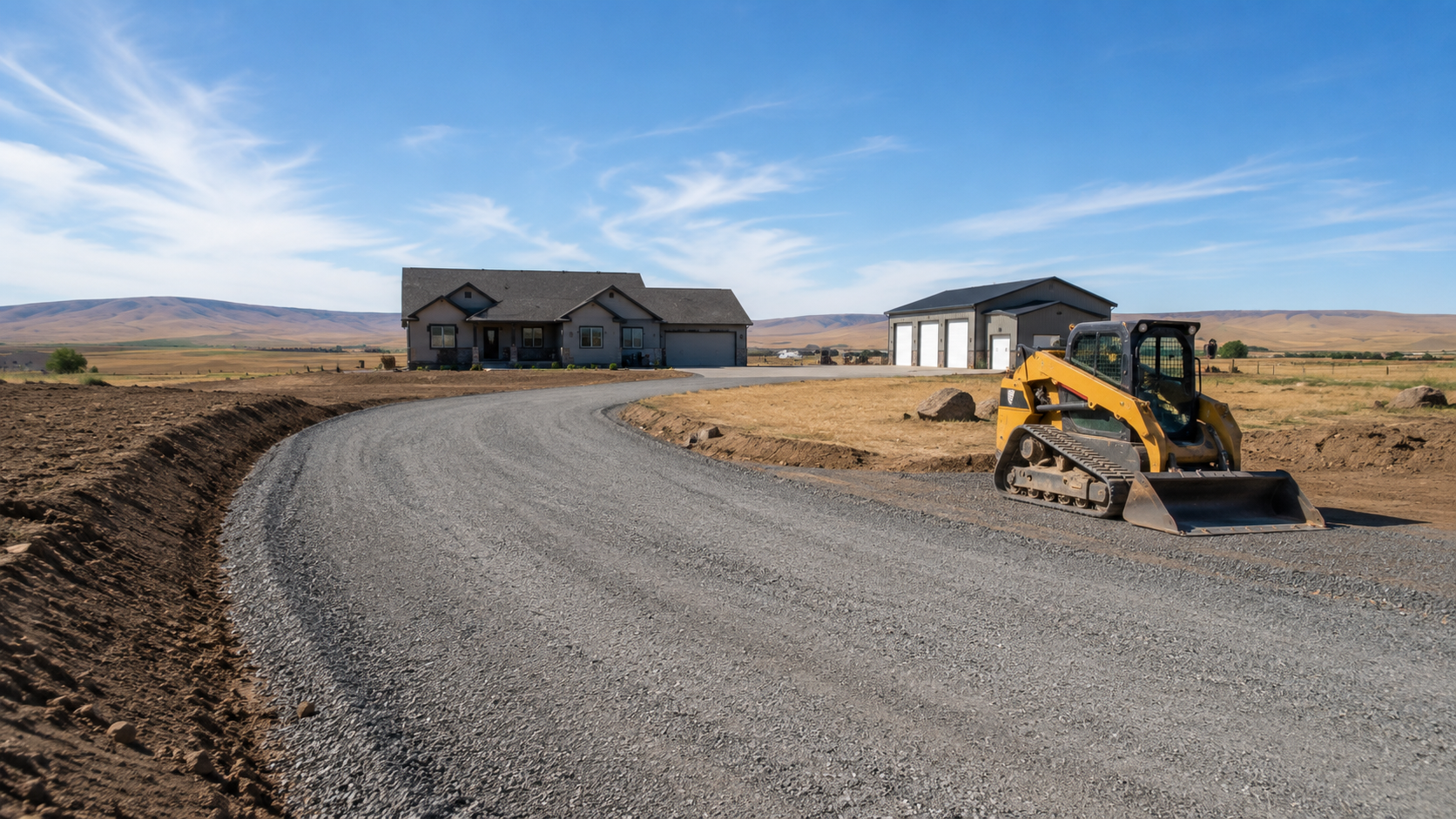
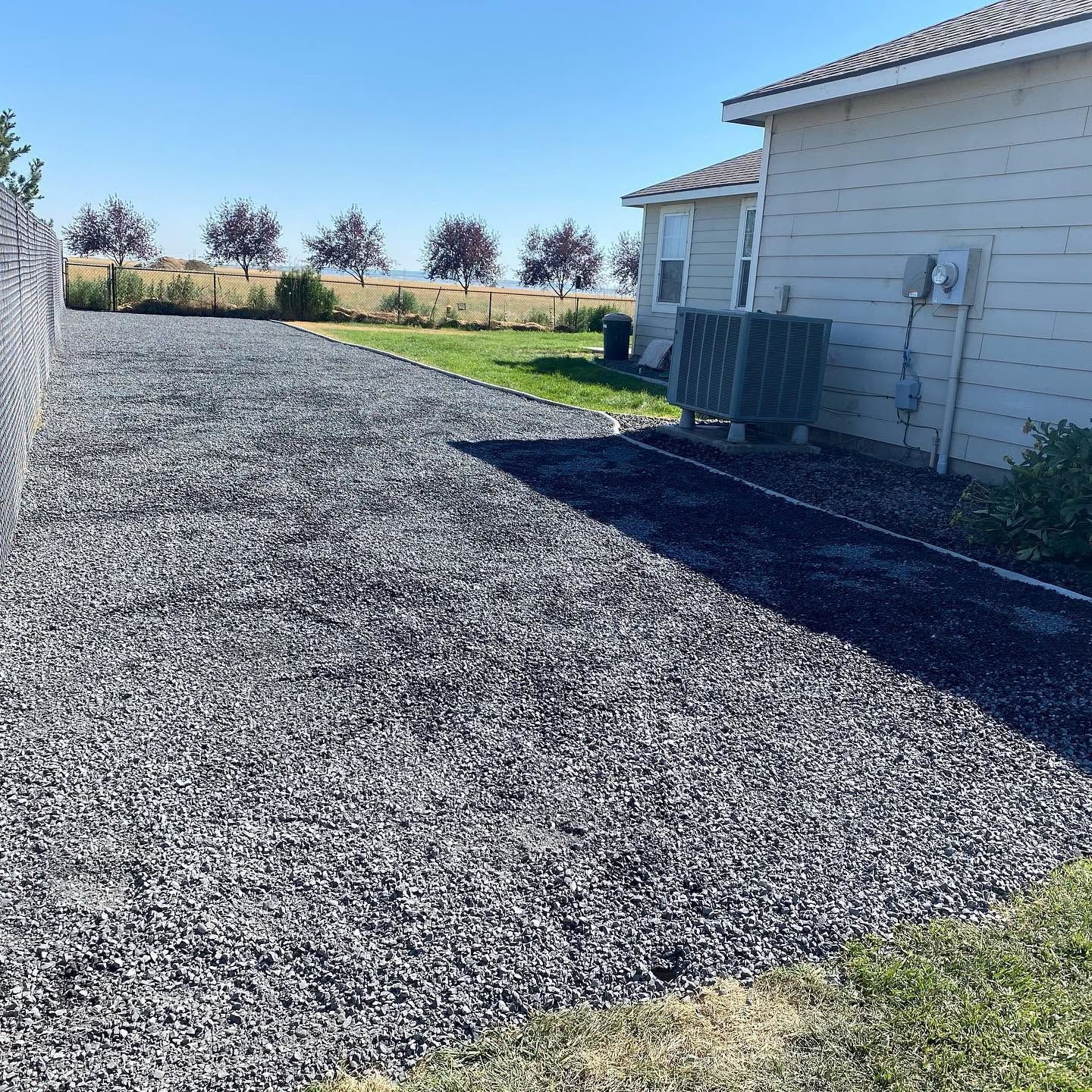
MORE ROCK IS RARELY THE ANSWER.
Ruts, potholes, and soft spots are symptoms, and the cause almost always sits below what you can see. A subgrade that was never compacted. Base material too thin or the wrong gradation. No crown, so water runs down the driveway instead of off it. A culvert that plugged years ago and now sends runoff along the wheel tracks.
Spreading fresh rock over any of those buries the problem for a season. Fixing the layer underneath is what makes a driveway stop needing its own annual budget line.
- Subgrade assessed before any rock
- Base depth matched to the traffic
- Crown built in for surface runoff
- Edge drainage and culverts corrected
➜ GRAVEL DRIVEWAYS
GRAVEL DRIVES ARE ROADS, BUILT THE SAME WAY.
Highway construction and a rural driveway follow identical logic at different scales: a stable compacted subgrade, a structural base course of angular rock, a surface course that binds and sheds water, and a shape that moves runoff to the edges. Skip any layer and the ones above it fail early. Build all four and a gravel drive carries loaded trucks for years with nothing more than occasional grading.
LONG RURAL APPROACHES AND TIGHT TOWN LOTS.
A quarter-mile farm approach and an in-town parking pad are different problems. The long run needs crown, ditch lines, and culverts at the crossings, and it has to carry equipment weight in every season. The town lot needs a clean edge, a defined transition at the street, and drainage that does not send water toward a neighbor. Both start with the same question about what is underneath.
RE-GRAVELING WAS NEVER THE FIX.
The driveways we get called to rebuild have usually been re-graveled for years, sometimes by three different contractors, and the ruts always come back because nobody addressed the base or the water. 11 years of watching that pattern repeat is why our first move on any driveway call is a shovel test rather than a truckload of rock. What is your driveway doing that brought you here?
WHAT A PROPERLY BUILT DRIVEWAY DELIVERS
A Surface That Holds Its Shape
Compacted subgrade and correct base depth keep wheel tracks from working down into soft ground, which is what turns a smooth drive into a washboard within a single season.
Water That Leaves At The Edges
A built-in crown sheds runoff to the shoulders instead of letting it run the length of the drive, where it carves channels and strips the surface material away.
Fewer Maintenance Loads
A drive built with the right structure needs occasional grading rather than annual rock, which turns a recurring expense into a one-time investment with a long payback.
Access In Every Season
A stable base carries delivery trucks, equipment, and emergency vehicles through wet spring conditions rather than turning into ruts the first time something heavy comes in.
Less Dust And Loose Rock
Correct gradation and compaction bind the surface, which cuts down on the dust cloud, the rock migration into the lawn, and the loose material that ends up in your tires.
A Clean Approach To The Road
A properly built transition at the street or county road keeps gravel out of the roadway, meets the approach standards that apply, and stops the washout that forms at the edge.
➜ WHAT WE BUILD
OUR GRAVEL DRIVEWAY WORK
Driveway work runs from a full build on raw ground to a targeted correction on a surface that keeps failing in one spot. These six cover most of it.
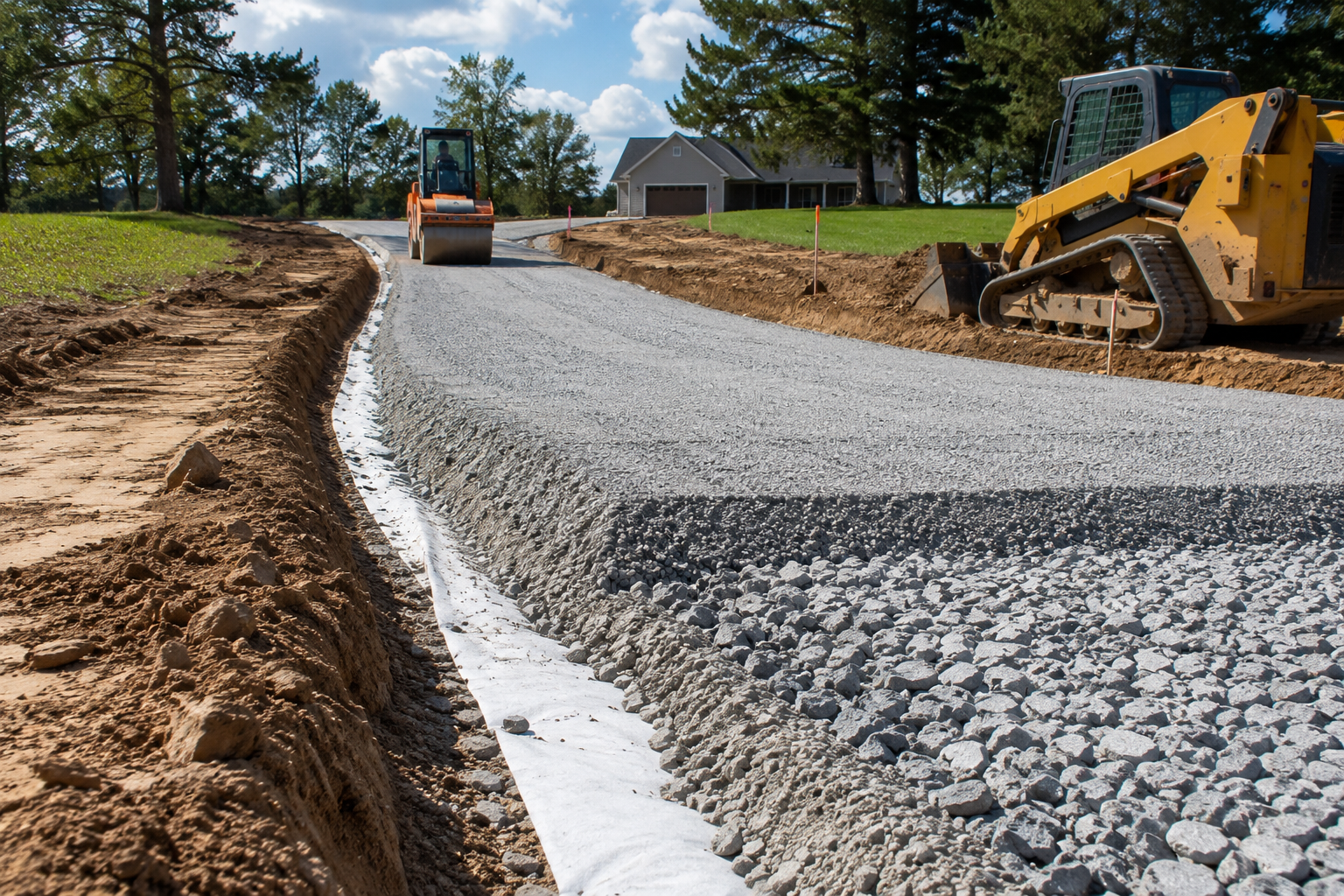
FROM SCRATCH
New Driveway Construction
Building a driveway from the subgrade up: clearing and stripping the route, compacting the base, placing structural rock in lifts, and finishing with a surface course shaped to a crown.
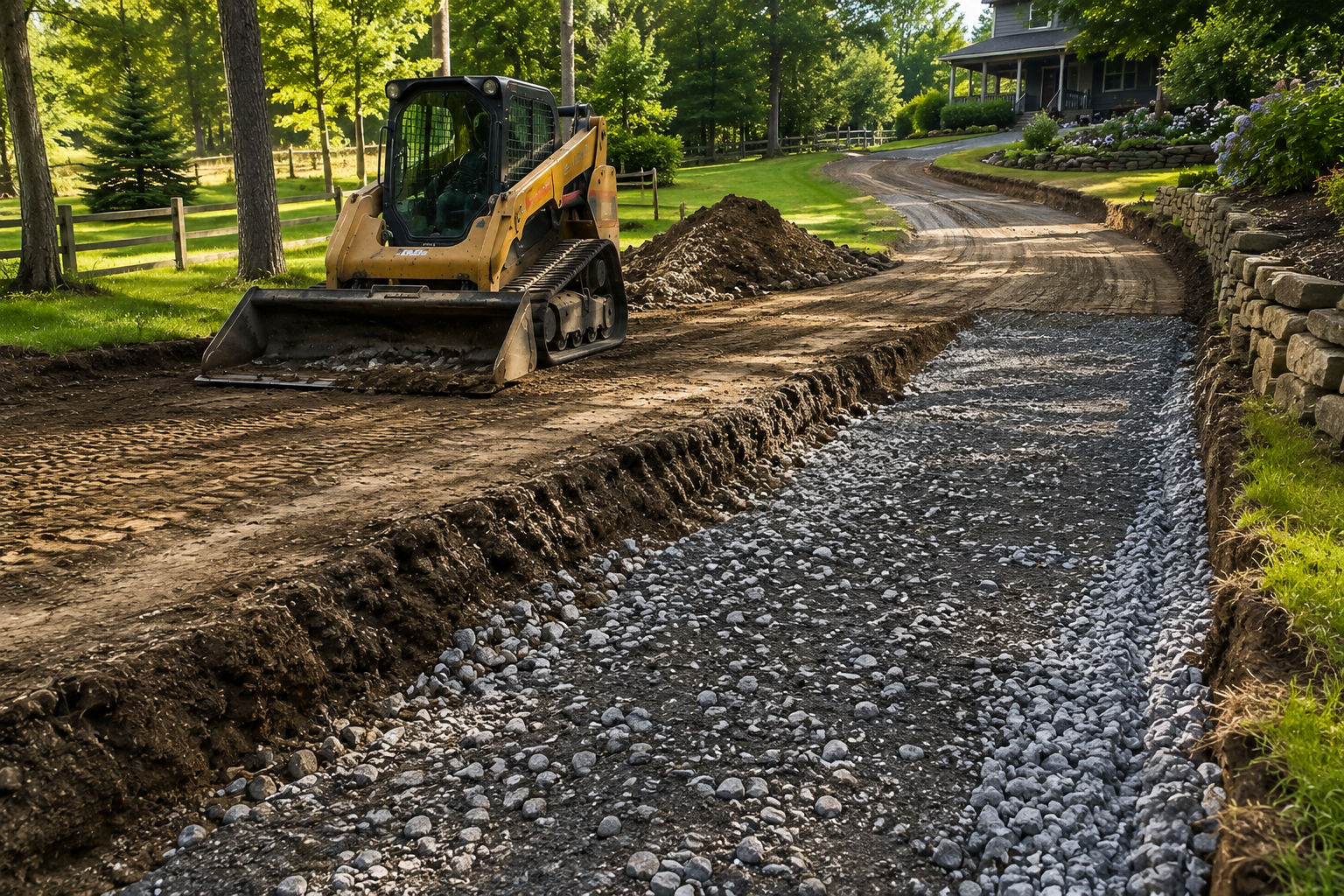
REBUILDS
Driveway Reconstruction and Base Repair
Removing failed surface material, correcting or replacing the base where it has thinned or contaminated, addressing the drainage cause, and rebuilding the structure rather than covering the symptoms.
MAINTENANCE
Regrading and Pothole Repair
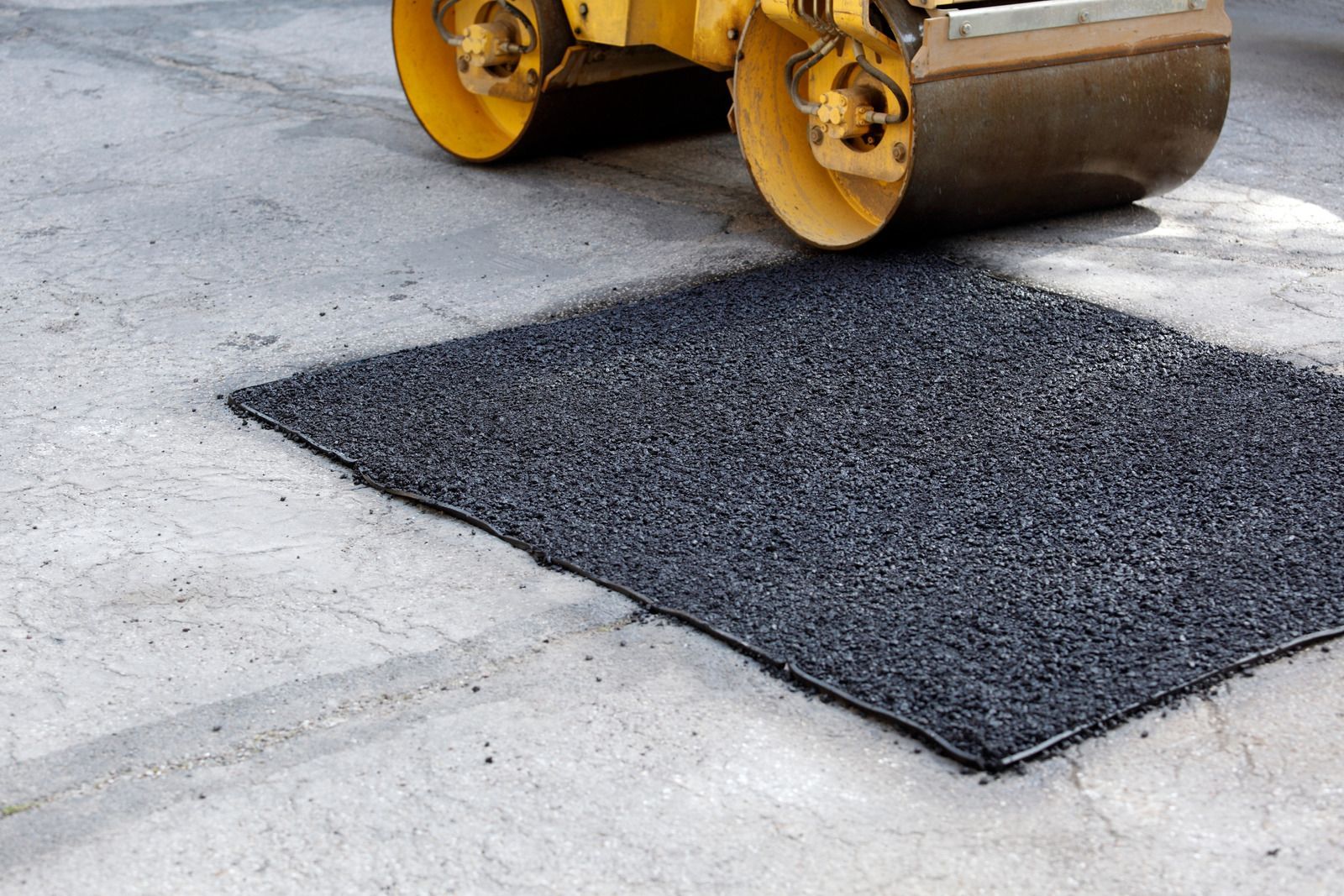
Reshaping an existing surface to restore crown, cutting out potholes and washboard rather than filling them, and compacting the corrected areas so the repair holds through the next wet season.
PARKING
Parking Areas and Equipment Pads
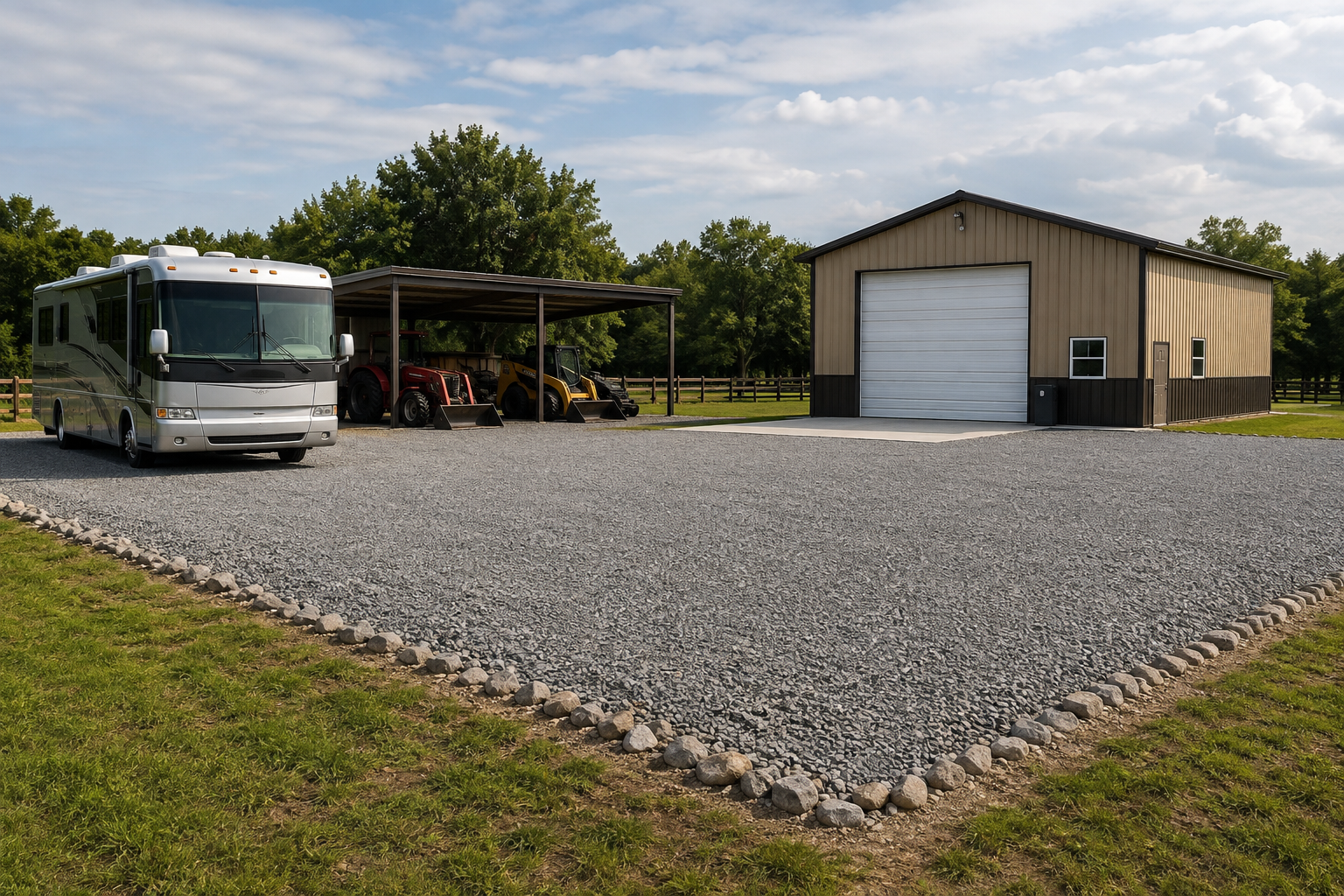
Constructing gravel parking areas, RV and equipment pads, and shop aprons with base depth matched to the weight that will sit and turn on them, and drainage that keeps them firm.
THE ENTRANCE
Approaches and Road Transitions
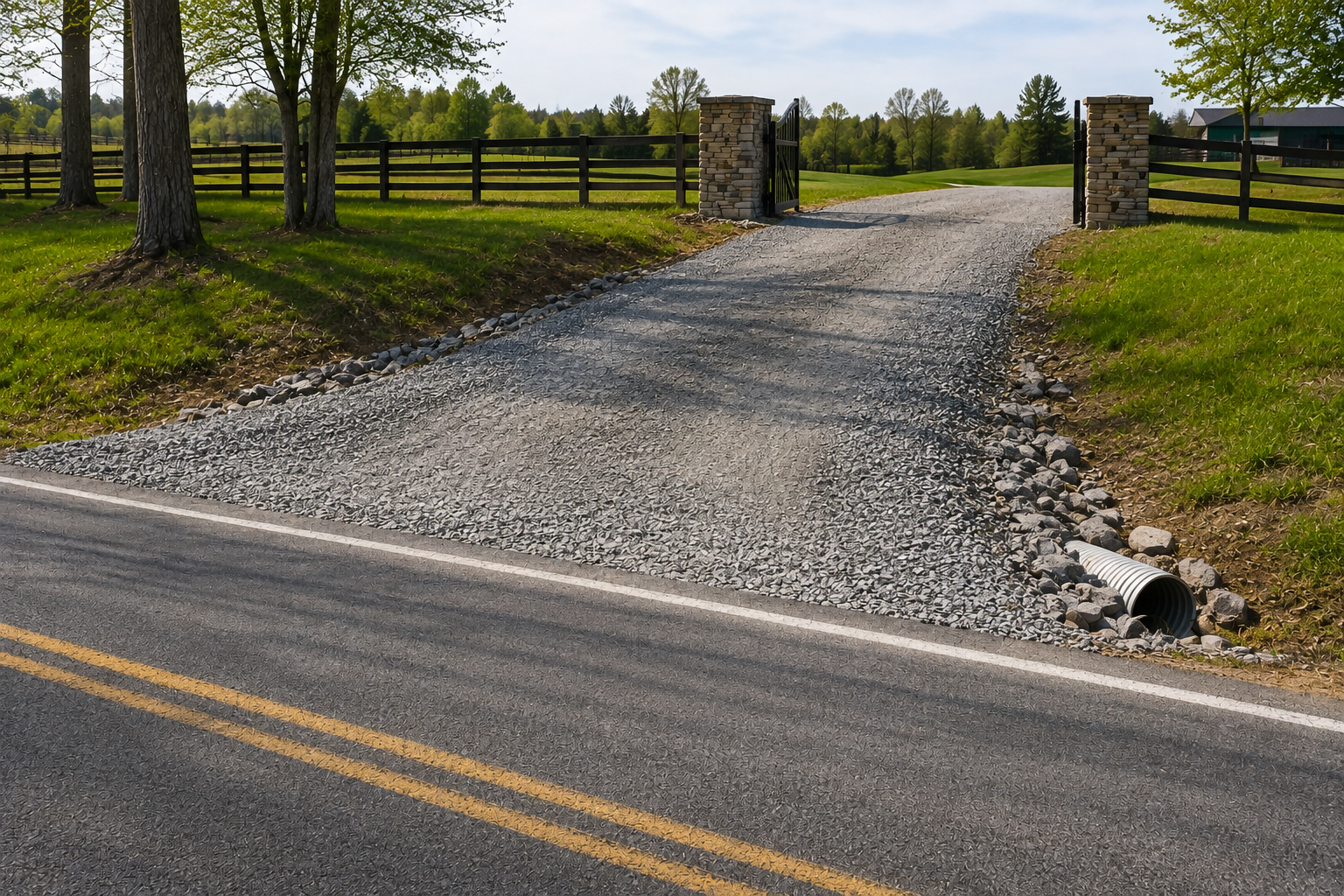
Building the entrance where a driveway meets a public or private road, with the culvert, grade, and surface transition set so the joint does not wash out or track gravel onto the roadway.
WATER CONTROL
Culverts, Ditches, and Shoulder Drainage
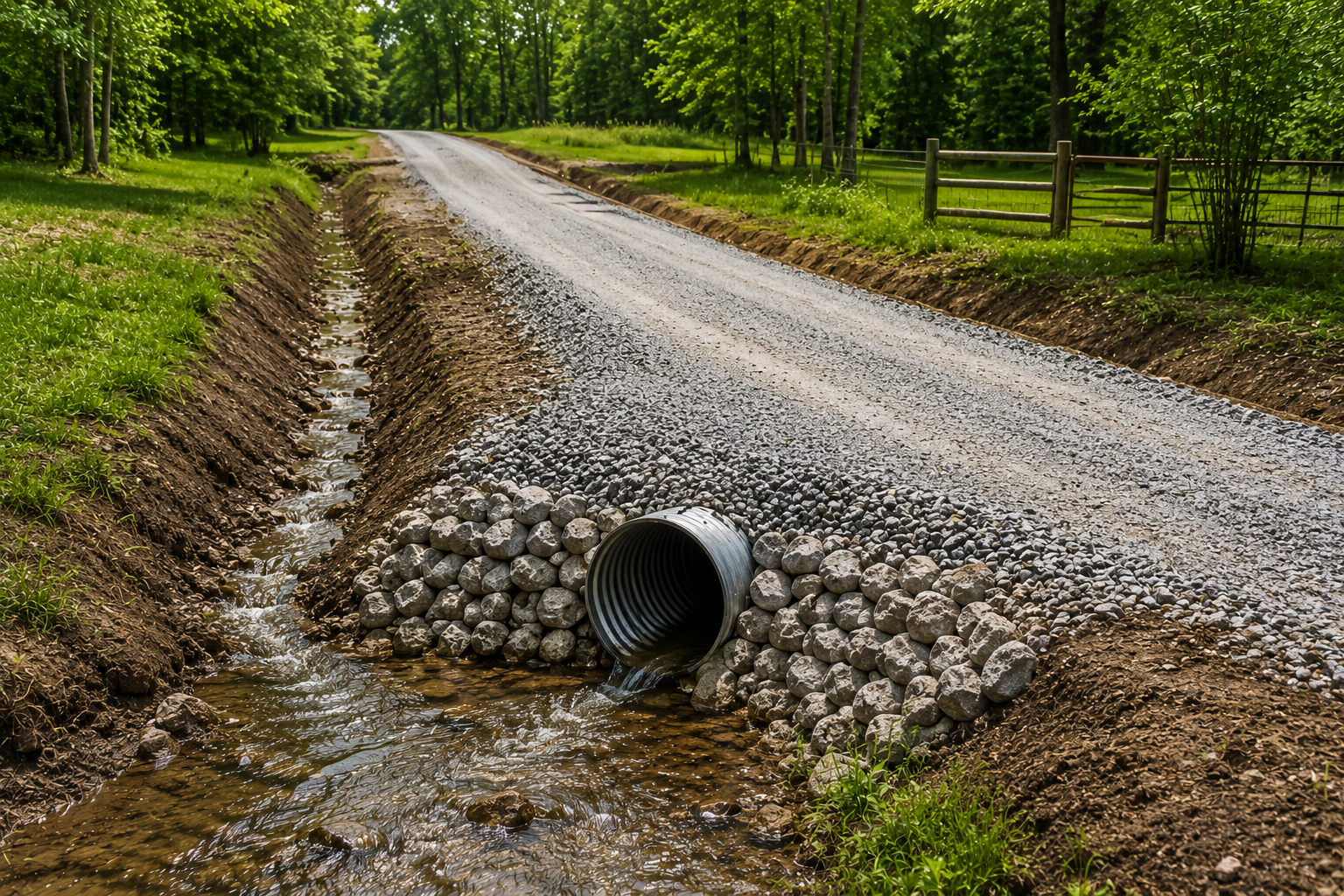
Installing or replacing driveway culverts, cutting shoulder ditches, and shaping the edges so runoff has a path away from the driving surface instead of down the middle of it.
➜ THE WORD ON OUR WORK
WHAT OUR CLIENTS SAY.
The comment that comes up repeatedly on driveway work is about the second winter rather than the first. Anyone can make a gravel drive look good in October. Staying flat through March and a full spring thaw is the actual test.
➜ Common Questions
FREQUENTLY ASKED QUESTIONS.
Driveway questions cover why the surface keeps failing, what gravel to use, and how thick the structure really has to be. These come up most often.
Can you repair a gravel driveway that has developed ruts, low spots, or drainage problems?
Yes. Many gravel driveway problems involve more than needing another layer of gravel. We evaluate the grade, base, drainage, and existing material before determining whether regrading, additional base, compaction, drainage improvements, or a combination is needed. A test hole answers it.
How thick should the gravel be on a driveway?
A typical residential drive uses 4 to 6 inches of compacted base with a 2 to 3 inch surface course above it. Heavier traffic, soft subgrade, or equipment loads all push those numbers up. Subgrade condition drives the final number.
What kind of gravel works best for a driveway surface?
Angular crushed rock with a range of particle sizes, often called road mix or crushed base, locks together under traffic. Round river rock does not bind and migrates under wheels almost immediately. Fines in the mix are what bind it.
Why does my driveway wash out every spring?
Almost always a shape and water problem rather than a material one. Without a crown or working edge drainage, snowmelt and rain run along the driveway and carry the surface material with them. Rebuilding the crown usually solves it.
What is a crown and how much does a driveway need?
The crown is the slight ridge along the center that sheds water sideways. A drop of roughly 2 to 4 percent from center to edge is typical, enough to move water without feeling uneven. Shoulders have to drain as well.
How long does a gravel driveway last?
A properly built one can run decades with periodic grading. Dozer Construction & Landscaping, LLC has rebuilt driveways across Moses Lake, WA that failed in a few years purely because the base was skipped. Base depth is the deciding factor.
Do I need a permit or culvert for a new driveway approach?
Where a driveway meets a public road, an approach permit and a correctly sized culvert are commonly required. Requirements come from the city or county road department and are confirmed before construction. Culvert size depends on ditch flow.
Can a gravel driveway be built on soft or wet ground?
Yes, with extra work. Geotextile fabric over the subgrade, additional base depth, and drainage to remove the water are what Dozer Construction & Landscaping, LLC uses on soft Moses Lake, WA ground that cannot support heavy traffic alone.
➜ HOW WE WORK
FROM SUBGRADE TO TOP COURSE, HERE IS HOW.
STEP 01
WE DIG A TEST HOLE
Before pricing anything we find out what is actually under the surface: base depth, material type, contamination, and how the subgrade behaves. That determines whether this is a repair or a rebuild.
STEP 02
WE TRACE THE WATER
Where runoff enters, where it travels, and where it should leave are identified, along with any culvert or ditch that has stopped functioning. Drainage gets fixed before the surface does.
STEP 03
WE PREPARE THE SUBGRADE
Failed material is removed, soft areas are excavated and replaced, fabric goes down where the ground needs it, and the subgrade is shaped and compacted to support what goes above.
STEP 04
WE BUILD THE BASE
Angular structural rock is placed in lifts to the depth the traffic requires and compacted each pass, because base depth and compaction are what carry the load rather than the surface layer.
STEP 05
WE SHAPE AND SURFACE
The top course goes on and the drive is shaped to a crown with defined edges, then compacted so the surface binds instead of sitting loose on top of the base.
STEP 06
WE FINISH THE EDGES
Shoulders are dressed, ditch lines are cut, culvert ends are cleaned, and the approach transition is finished so water leaves the driveway everywhere along its length.
➜ GET YOUR FREE ESTIMATE
MEASURE YOUR DRIVE WITH US, AND THE ESTIMATE IS FREE.
Driveway pricing needs two numbers nobody can get from a photo: how long and wide the drive is, and what is already under it. Tell us where the property is and what the surface is doing, and we will measure, dig a test hole, look at where the water goes, and give you a written scope saying whether this is a grading job, a base repair, or a rebuild. Contact page or quote form, either one.
WHAT YOUR DRIVEWAY QUOTE COVERS:
- Length, width, and area measured
- Existing base condition from a test hole
- Subgrade preparation and fabric if needed
- Base depth and surface course material
- Crown, shoulders, and edge drainage
- Culvert and approach work if required